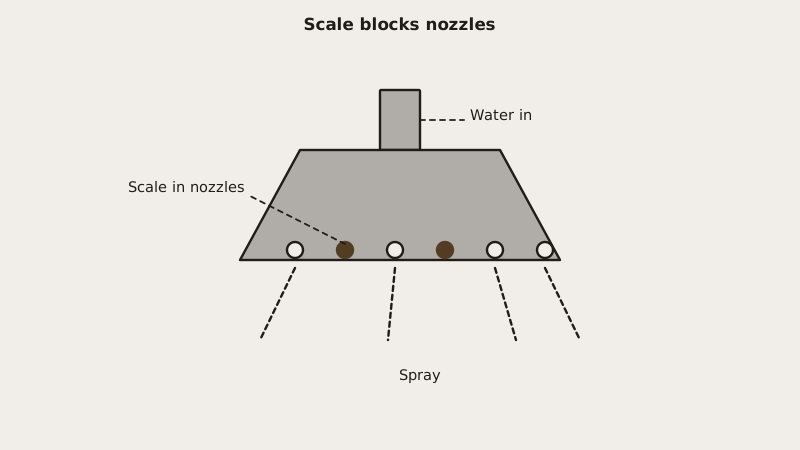
White or tan crust on faucets, glass and showerheads is mineral scale, and a gentle acid, meaning white vinegar or citric acid, breaks down most of it. Soak it, wipe it, rinse it. Scale inside a water heater or pipes is different: it needs flushing, descaling or treating the water. Pasadena's supply is very hard, so it comes back. For the lasting fix, our overview of water softener and conditioning systems explains the options.
How hard is Pasadena's water, and why does it leave scale?
Pasadena Water and Power calls its water very hard, averaging about 12.9 grains per gallon, and its 2026 report lists 2025 hardness between 202 and 256 mg/L. On the USGS scale, readings over 180 mg/L fall in the very hard class. Calcium and magnesium drive it, and heat or evaporation leaves them behind as crust.
Where it comes from: PWP says roughly 40 percent of its water is pumped from the Raymond groundwater basin and about 60 percent comes from the Metropolitan Water District, with the blend changing through the year, so hardness moves with the season. Neighboring cities use different suppliers and numbers, so a house in Altadena or Arcadia may differ from one in Pasadena. See water hardness by zip code for how to check yours.
PWP is clear that the minerals themselves are harmless to drink. The problem is on the surfaces and in the equipment: spots, film, clogged aerators and a build-up inside appliances that wastes energy and shortens their life.
Which cleaner takes scale off faucets, showerheads and glass?
Acid does the job. Vinegar or a citric acid mix loosens light scale in minutes and thick crust in a few hours. Wrap a wet cloth or a bag of solution around the fixture, leave it, then work it over with a soft brush and rinse well. Store-bought descalers rely on the same chemistry, so read the label and the fixture maker's care notes.
A practical routine:
- Showerhead. Remove it if it unscrews, or tie a bag of vinegar around it, soak for an hour or so, then run hot water through it. Nudge any clogged nozzle holes with a toothpick.
- Faucet aerator. Unscrew the aerator, soak it, and brush out the screen. A weak or sideways spray usually means scale.
- Glass and tile. Spray, wait, scrub with a non-scratch pad and squeegee after showers.
- Kettles and coffee makers. Run the manufacturer's recommended descaling cycle.
Cautions: acid can etch natural stone such as marble and travertine, and it can dull some finishes (brushed brass, oil-rubbed bronze, plated surfaces). Test somewhere hidden first. Keep cleaning products separate, and above all keep vinegar away from bleach. If a fixture is old and the threads are corroded, force can break it, which turns a cleaning job into a plumbing call. Our guide on signs of hard water on hair and skin covers the personal side of the same problem.
How do I deal with scale inside the water heater and pipes?
A tank heater is flushed through its drain valve to carry sediment out, and a tankless heater is descaled by circulating a mild acid through the heat exchanger using a small pump and hoses. Both jobs are routine for a plumber. Scale inside the pipes themselves cannot be scrubbed out, and heavy build-up may mean replacing sections.
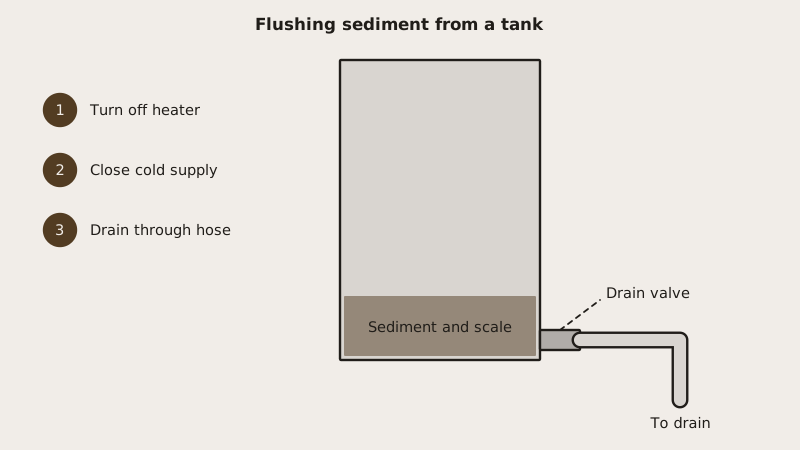
Signs of scale in equipment:
- A tank that pops or rumbles when heating, from steam trapped under sediment.
- A hot supply that fades earlier than it once did.
- A tankless heater showing an error code or heating unevenly.
- Falling flow at taps and a spray that has gone ragged.
Owners of tankless heaters in hard water areas should expect periodic descaling, and plan it. Manufacturers write their own procedures into the manual, so follow the maker's steps and warranty terms. For a tank, our notes on no hot water problems show how sediment can lead to failures, and for newer equipment see Navien tankless installation in Pasadena. If the pipes are the issue, a planned repipe may be the honest answer.
Which long-term fixes stop scale: a softener, a conditioner or nothing?
A salt-based softener exchanges calcium and magnesium ions for sodium, taking hardness out of the water so scale stops forming. Scale prevention devices claim to change how crystals form rather than removing them. They differ in evidence and cost, and the best choice depends on what you want to protect. It helps to know the trade-offs before buying.
PWP notes that household softeners usually exchange hardness for sodium, that some cities have restricted them because the discharge carries a lot of chloride, and that water that is too soft can corrode pipes. It also points buyers to the NSF website for approved devices. Check local rules and your own city before installing one, and ask a plumber about the drain and the salt supply.
For prices, see what a softener costs to install; the owner-install route is in doing a softener install yourself. A softener usually goes on the main line before the heater, and a plumber should handle the connections, drain and any bypass.
How do I prevent scale from coming back?
Wipe and squeegee surfaces, descale showerheads and aerators every few months, flush the tank heater yearly or as the manufacturer says, descale a tankless heater on its schedule and consider a softener if scale keeps recurring. The point is to remove minerals before they harden. Fresh film wipes off, and old crust needs acid.
Habits help: dry the shower glass after use, keep a spray bottle of vinegar and water under the sink for quick wipe-downs, and check the aerators when flow drops. A cloudy dishwasher or a slow washer deserves a descale as well.
To have the heater and water system inspected, use the quote page. We arrange the plumber, who does the work. Everything else starts at Pasadena Pipe Works.
Common questions
Can hard water harm my health?
PWP says the minerals that cause hardness, calcium and magnesium, are harmless. The issues are practical: scale on fixtures, film on skin and glass, and wear on appliances. If you have a medical reason to limit sodium, ask a doctor before using a salt-based softener, because it adds some.
Does vinegar damage pipes or fixtures?
Short soaks on typical chrome and porcelain are fine, but acid can etch stone and dull some finishes, and repeated strong exposure can wear seals. Do not run strong acid through old pipes. For internal scale in appliances, use the maker's descaling process rather than improvising.
How often should I flush the water heater?
Many manufacturers suggest a yearly flush for tank heaters, and hard water makes that more important. Tankless units on very hard water often need descaling at least yearly. Check your manual for its schedule, because warranty terms may depend on it.
Will a softener clear the scale I already have?
It stops new scale forming and may slowly soften some old deposits, but heavy crust that has already hardened stays put. Descale the fixtures and heaters first, then add the softener or conditioner, so that the new system starts from a clean base and works as intended.
What details matter in a descaling or softener quote?
What is included, how the drain and bypass are handled, whether salt-based units are permitted at your address, what upkeep they need and what the maker's warranty expects. Have it written down and the contractor license number, so the state record can be checked.
Sources
- Pasadena Water and Power, water quality FAQs (hardness, sources, softener notes)
- Pasadena Water and Power, 2026 annual drinking water quality report (2025 hardness data)
- U.S. Geological Survey, hardness of water (classification and cause)
- Hard water, Wikipedia
- Navien, product lines including scale prevention equipment
Page updated