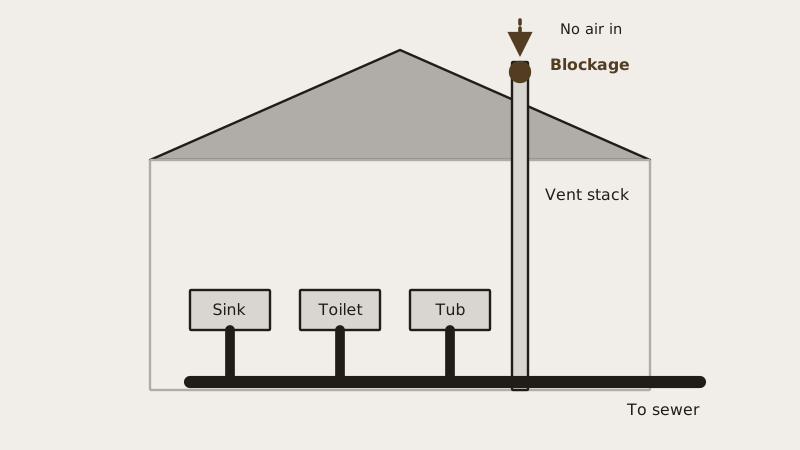
A vent clog is a blockage in the pipe climbing through your roof, the one that feeds air to the drain system. Without that air, water leaves fixtures slowly and noisily. The tell is several fixtures misbehaving together: gurgling toilets, sluggish sinks, sewer odor, even though the individual drain lines are clear. If that sounds familiar, first rule out an ordinary clog using our main toilet and drain clog page, then come back.
The short version: you can look from the ground, but clearing a vent means working at roof level, and that part is worth paying for.
What does a drain vent do, and what happens when it clogs?
A vent pipe brings air into the drain lines so wastewater flows freely and trap water stays put. Think of pouring from a can with one hole in the top: it glugs. A clogged vent makes drains do the same. Water slows, toilets gurgle, and traps can be siphoned dry, letting sewer gas drift indoors.
Every drain in a house connects to a vent, and most vents join into one or two stacks that exit through the roof. The pipe runs up inside a wall, then through the attic, so a lot of it is hidden. What runs through an attic or crawlspace is shown on our attic and crawlspace plumbing page.
The top is the usual trouble spot. It is open to the sky, so whatever blows in or builds a home there can narrow it or close it off.
How can I tell the vent is clogged and not the drain?
Look at how many fixtures are affected. A single slow sink usually means a local clog in that sink's trap or line. Gurgling or slow drainage in several fixtures at once, especially toilets and the tub or shower together, points to the vent. Odors and bubbling in a nearby drain when a toilet flushes add weight to that diagnosis.
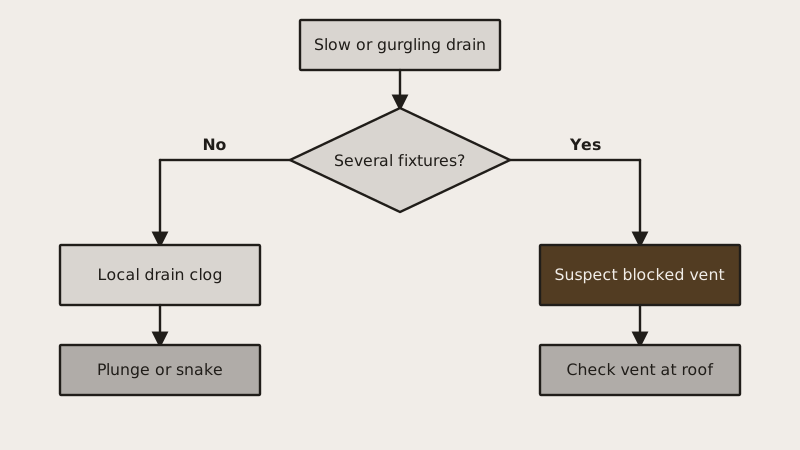
Clues that tilt toward the vent:
- Gurgling from a toilet, tub or floor drain when another fixture drains.
- Slow drains everywhere, with no single sink standing out.
- Sewer smell near drains as trap water gets pulled out. Other possible sources are listed in our sewer smell guide.
- A toilet that flushes weakly though its trap and bowl are clear.
- Plunging or snaking helps briefly, then the problem returns.
Clues that point away from the vent: a single fixture that drains slowly, water backing up from a drain only when you run a certain appliance, or a clog that a plunger or snake clears for good. A shower that alone is slow, full of hair, belongs with unclogging a shower drain and the clogged shower drain page, long before anyone suspects the roof.
A caution: vent clogs and main sewer line clogs look alike. Sewage welling up at the lowest drain usually signals the sewer line rather than the vent, and that needs a plumber with a camera, not a ladder.
What blocks a plumbing vent?
Nests are the most common culprit: birds, squirrels, rodents or wasps building in or on top of the open pipe. Leaves, seeds and debris from nearby trees follow. In a place with eucalyptus, palms and pines like the San Gabriel Valley, litter on the roof is easy to imagine, though we can't say it is the leading cause here. Ice blocks vents in cold climates, rarely in Pasadena.
Less common are:
- A vent pipe that has separated or collapsed inside a wall or attic, or a sag that traps water.
- A vent that was never connected properly during a remodel, or was capped.
- A dead rodent or other debris dropped down the pipe.
- Old cast iron or galvanized vent pipe that has corroded shut from the inside. Older houses carry that pipe, as our page on cast iron pipes explains for drains.
Newer additions matter too. A bathroom or kitchen remodel that skipped venting, or a fixture tied into the wrong place, can mimic a blockage. A plumber checks that the layout itself is right, and permitted venting changes get reviewed by the city's building office.
Can I clear a clogged vent myself?
You can inspect it, and if the roof is low, dry and safe to stand on, you can look down the pipe with a flashlight and remove loose debris. Past that, leave it. Falls from roofs injure people every year, and a nest packed deep needs a long snake. Clearing the vent through the roof is the standard fix, so most owners hire a plumber for it.
If you do look, follow these rules:
- Work from the ground first. Binoculars show a bird nest or a bent cap.
- Don't climb a wet, steep or tiled roof. Clay tile breaks underfoot.
- Don't use chemical drain cleaner in an attempt to fix a vent. It can't reach the blockage and can harm pipes.
- A garden hose run down the stack can flush light debris. Another approach is a long, narrow snake fed from the roof opening, but go slowly, because a snake can punch a hole in old pipe or snag on a joint.
If the vent clears and drains come back to normal, the job is done. If symptoms persist, the cause may be a second blockage in the drain line itself or a vent separated inside the wall. Neither is a DIY repair.
When does the roof work belong to a plumber?
Pick up the phone if the roof is high or steep, the blockage sits deeper than you can reach, symptoms persist after the top is clear, or sewage backs up. A plumber can scope the line, feed a cable from the roof and trace the vent's route. Jobs over $1,000, and permitted ones, require a contractor with a California license.
A written quote helps here, because vent problems vary from a five-minute nest removal to opening a wall to reconnect a pipe. Ask what the plumber found, with photos of the debris or the break. Drain cleaning services cover the roof-level end of the job, and deeper trouble falls to a plumber for pipe repair. You can request a visit through the quote page.
Ask the plumber to cover the vent top with a screen or cap rated for vents if birds and leaves keep returning. Never block the opening with anything that stops airflow. Some places allow air admittance valves as a substitute for a vent through the roof, but their use is restricted, so confirm with the city first.
A gas smell is different and urgent: step out, then call SoCalGas on 1-800-427-2200 from outdoors. A rotten-egg smell is gas, not a vent clog.
How do I prevent a vent clog from coming back?
Cut back branches that overhang the roof, check the vent tops once a year after the windiest season, and screen the openings with a cover made for vents. Slow drains and a gurgle are early warnings, so act on them before the trap water disappears. Keep hair and grease out of drains too, since a blocked line makes a vent problem look worse.
A yearly look from the ground with binoculars costs nothing. If you have a plumber out for something else, ask them to glance at the roof terminals. Older Pasadena houses may have several vent stacks, and an addition may have its own.
For a drain that clogs on its own, see how plumbers deal with sink drains. The home page lists our other plumbing work.
Common questions
How long does a vent clearing visit last?
Debris or a nest at the top of an accessible vent can often be cleared fast, within an hour, once the plumber reaches the roof. A deeper clog, a separated pipe or a vent that needs a wall opened takes longer. We can't promise a time before the roof and symptoms have been seen, so ask for an estimate along with the quote.
What does clearing a drain vent cost?
Published guides give no single reliable figure, because the job ranges from a quick roof-level cleaning to opening walls. A simple clearing costs far less than a repair that involves repiping or reconnecting a vent. Get a written quote naming the work and the access needed, and compare it against the plumber's hourly rate.
Is sewer smell a sign of a blocked vent?
It can be. When a vent is blocked, flushing and draining pulls water out of traps, which are the water seals that keep sewer gas out. Without the seal, odor enters the room. A smell that comes and goes with drain use is a hint. Other causes are on the sewer smell page.
Is a gurgling toilet always a vent problem?
No. Gurgling also comes from a partial clog in the drain, a failing toilet seal or a problem in the main sewer line. If only one toilet gurgles and it also drains slowly, a local clog is more likely. If several fixtures gurgle, or gurgling starts when another fixture drains, the vent moves up the list.
Does a clogged vent need a permit?
We found no city rule on permits for clearing debris from a vent, so ask the plumber. Repairing or changing the vent piping is different, because the city reviews permitted plumbing work. If pipe is being replaced or a fixture moved, check whether a permit applies, and phone the city's building office if unsure.
Sources
- Published guides to clogged plumbing vents from home-improvement and plumbing sources (symptoms, causes, roof-level clearing), checked November 2026
- California Contractors State License Board, hire a contractor
- SoCalGas, natural gas safety
Page updated