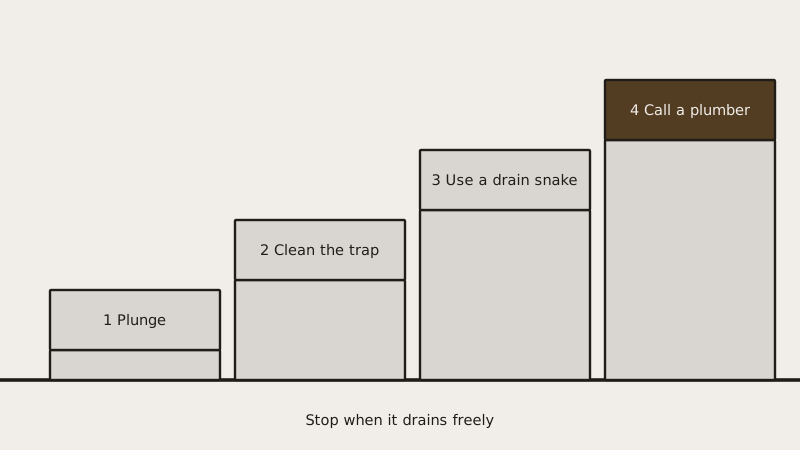
Work from the gentlest fix to the strongest: plunge, clean the trap, then snake. Skip the chemicals, which seldom do better and put caustic liquid in a pipe you may have to open next. Water that stays put, or other drains that are lazy as well, means the blockage lies farther along, and a plumber is your next call. For toilets, the companion page on a clogged toilet plumber applies.
Every step follows, with its reason, along with advice on standing water, bathroom versus kitchen differences and the point to stop. Rather skip the work? A visit starts with a short form on our quote page.
In what order should I tackle a blocked sink?
Begin with a cup plunger and hot tap water, graduate to cleaning the curved trap beneath the basin, then try a hand-cranked drain snake, and phone a plumber if all three fail. That ladder keeps risk low and avoids caustic chemicals, which can splash, harm older pipes and burn whoever opens the drain after you.
Prepare first: empty the vanity, set out a bucket and towels, and pull on gloves. Poured a chemical product recently? Assume it is still sitting in the trap and add eye protection.
Stop at any point if water leaks from a joint you cannot tighten, if the pipes are corroded or crumbling, or if you are unsure. Those are plumber jobs.
How should a sink be plunged?
Pick a plain cup plunger, not the flanged toilet kind. Let the basin hold a few inches of water so the cup stays covered, wedge a wet cloth into the overflow slot, and press the plunger flat on the drain. Pump hard and evenly for roughly twenty seconds, then snap it up and see whether the level falls.
The rag matters, since otherwise pressure leaks out of the overflow and the plunger achieves little. On a two-bowl kitchen sink, seal the other drain too.
If several rounds fail, do not grind on for ten minutes; go to the trap. Plunging right after a chemical product is a bad idea, since splash-back can injure you.
How is the curved trap under the sink cleaned out?
Park a bucket beneath the U-shaped pipe and back off both slip nuts, hand-turning where possible and using a rag-wrapped pair of pliers where not. Lower the trap, tip it out, and scrub the inside with a stiff brush. Inspect both pipe ends for hair, thread the nuts back on straight, and test with running water, watching each joint.
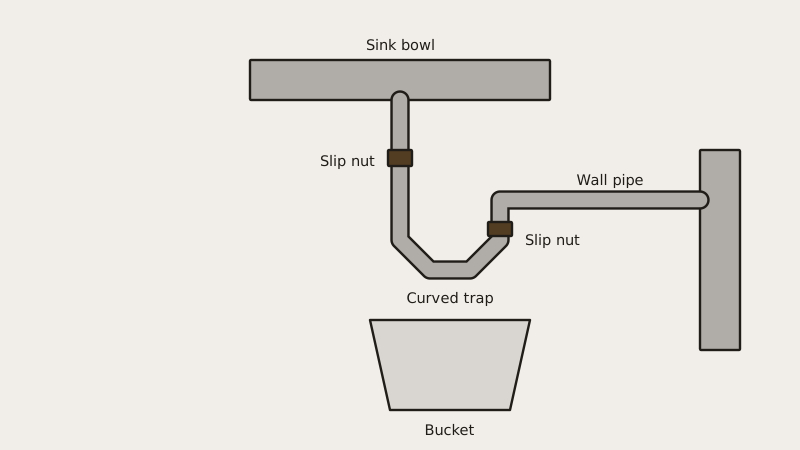
More clogs live in the trap than anywhere else, so this fix succeeds most often, in 15 to 20 minutes and with no chemicals. Plastic nuts need only a quarter turn beyond finger-tight, since they crack. Leave the tap on for a minute at the end so the trap refills its water seal against sewer gas.
Drips after reassembly usually mean a crooked nut or a slipped washer; take that joint apart and seat it again. In older Pasadena homes with chrome or brass traps, corroded nuts can seize, and forcing them risks cracking the line, so stop there.
When is a drain snake the right tool?
Use one when the trap is spotless and the basin still will not empty, which puts the blockage somewhere in the wall pipe. Feed the cable into the open pipe end, crank the handle until it grabs, draw the clog out or push it through, then flush with hot water.
Go slowly and do not force the cable if it meets hard resistance, since you can scratch or damage the pipe. A basic hand snake is a few-dollar purchase from a hardware shop, and plenty of owners clear hair-choked bathroom sinks with one.
A snake that returns nothing while water stays, or comes back wrapped in roots or heavy sludge, tells you that home tools have run out. Book help.
Do baking soda and vinegar or boiling water work?
They are mild options, good for light grease and soap film, not for hair mats or solid blockages. Hot tap water poured in stages can soften soap scum. Baking soda followed by vinegar fizzes but has little force. Skip boiling water on plastic pipes and on a trap holding standing water.
Never mix household cleaning products. The CDC warns that combining bleach with ammonia, vinegar or other cleaners can create gases that cause serious lung damage. If drain cleaner is swallowed or splashes the eyes, Poison Help is on 1-800-222-1222, and an emergency means 911.
A safer routine: fit a strainer, rinse it weekly, and follow greasy dishes with hot water.
What makes a sink slow down again within days?
A drain that slows again within days points to buildup further along the pipe, a sagging section, tree roots in the line, or a vent that is blocked. One fixture that keeps clogging is a sign to put a camera in the line instead of snaking it once more.
Pasadena Water and Power describes the city's water as very hard, and hard water leaves mineral scale in pop-up stoppers and drain tailpieces that catches hair and soap. Pull the stopper and look; a crusty, gunky stopper is a common cause.
Older houses add another reason. Cast iron and galvanized drain stubs roughen with age, so debris clings to them. The City of Pasadena's public works guidance notes that roots and grease are common causes of blockages in house sewer lines, which is a different pipe, but the same reasons apply on the way there.
Bathroom sink or kitchen sink: what changes?
Bathroom sinks clog with hair, toothpaste and soap, and they usually clear with a hair tool and the trap. Kitchen sinks clog with grease and food, often with a disposal or dishwasher drain attached, and need more care. Our kitchen guide and bathroom guide cover each in detail.
Bathroom readers: the bathroom sink walkthrough and bathroom sink drain page. Kitchen readers: the kitchen sink walkthrough and kitchen sink drain page.
A clogged dishwasher drain can back water into a kitchen sink, so check the dishwasher drain if both are slow.
At what point is it time to bring in a plumber?
Bring one in once plunging, trap cleaning and snaking have all come up empty, or when several drains lag together, gurgling or a sewer smell shows up, another fixture backs up, or a trap will not come apart without damage. Together these point at the branch or main line.
Plumbers carry cables, cameras and, for heavy grease or roots, hydro jetting that a hardware-store snake cannot match. A local plumber drives out once you have filled in the quote page, anywhere in Pasadena and the San Gabriel Valley.
Common questions
Is it okay to use Drano or a similar product?
It can be done, but treat it as the last resort. Caustic cleaners can burn skin, splash back, harm older pipes and leave hazardous liquid in the trap. Never mix products, never plunge after using one, and wear gloves and eye protection. A plunger, trap cleaning and a snake are safer first steps.
Why is the basin full and not emptying?
A full basin means a blockage downstream of the stopper, typically within the trap, or in the stretch of pipe right after it. Inspect the stopper, then plunge, then open the trap. When none of it works, the clog is deeper and calls for a snake or a plumber.
What can I do when there is standing water in the sink?
Plunge with the overflow closed off, then bail out the water and empty the trap into a bucket. Water left behind means a hand snake comes next. Pouring chemicals into standing water only adds a splash risk. If it is still stuck, book a plumber.
What should a sink clog cost with a plumber?
Price pages for 2026 generally show a fixture clearing at about $100 to $350 as a guide, more for deeper lines or night calls. The figure that matters is the one quoted in writing for your own home before work starts, so ask for that.
Should I treat a blocked sink as urgent?
Seldom, unless water is overflowing, backing up from other drains, or sewage is involved. Shut off water to the fixture, stop using it, and book a visit. If sewage is coming up anywhere in the house, treat it as urgent.
This guide is one of many on Pasadena Pipe Works.
Sources
- City of Pasadena Public Works, house sewer general information
- Centers for Disease Control and Prevention, guidance against mixing household cleaning chemicals, checked November 2026
- Pasadena Water and Power, water quality FAQs
Page updated