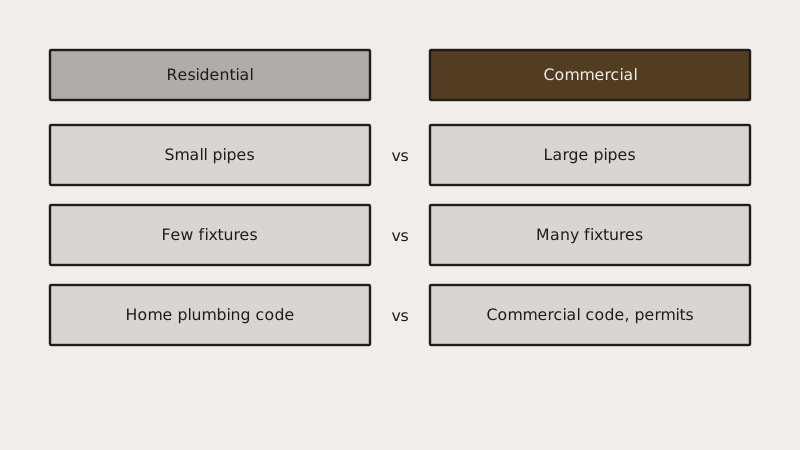
A residential plumber works in homes: faucets, toilets, water heaters, drains and supply lines for one family. A commercial plumber works in buildings with many users or special rules: restaurants, offices, shops, apartment blocks and warehouses. The pipes and tools overlap, but the scale, the codes and the schedule are not the same. Any business that specializes in one will usually do the other's small jobs, though a large commercial system calls for experience a house call does not. Our commercial plumbing services page lists what we arrange for businesses, and the Pasadena Pipe Works home page covers the rest.
Is a commercial plumber really different from a residential one?
What separates them is the building, not the license paper. In California, the Contractors State License Board defines the C-36 plumbing contractor class by what the work does, supplying safe water and disposing of waste, "in all structures and fixed works." The same classification covers a bungalow and a restaurant, so the trade experience is what separates them.
In practice a residential plumber knows homes: copper and PEX supply lines, cast iron and ABS drains, sewer laterals, water heaters in garages and closets. A commercial plumber knows bigger systems: pipes sized for many fixtures at once, flushometer toilets, floor drains, grease interceptors, backflow assemblies, boilers and multi-story risers. Many plumbers do both, but a business specializes in one side when it has the crews, tools and insurance for it, and you should ask which.
How do the jobs and the codes compare?
A house usually has one water meter, one sewer line and a handful of fixtures, all under the residential plumbing rules. A commercial building adds more fixtures, higher demand, accessibility rules, fire-protection lines and often several meters. Food businesses face grease rules, and many commercial systems need regular backflow testing.
Specific examples around the San Gabriel Valley: a food facility in Pasadena has been expected to put a grease interceptor outside the building, according to the city's public health plan-check guide, which dates from 2015 and should be rechecked before a project. South Pasadena's sewer code requires an interceptor for new food service operations and large remodels. Cross-connection protection is another commercial staple, explained in backflow testing. Permits are also bigger: a tenant improvement means plans, a plan check and inspections, not just a counter visit.
When should I call a residential plumber, and when a commercial one?
Call a residential plumber for a house, a condo unit with its own fixtures, or a duplex. Reach for a commercial plumber when the site is a restaurant, a shop, an office, a medical suite, a gym or an apartment building with shared lines. The gray zone is a small rental or a home office, where either can help.
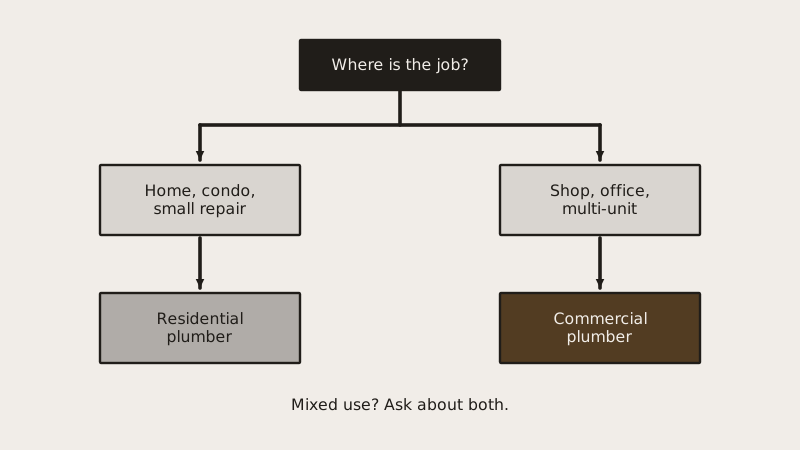
Think about what is failing. A single clogged sink in a unit is a house-style call. A backed-up floor drain in a kitchen, a failed backflow test, a whole building without hot water, or a main sewer stoppage affecting several tenants is commercial work. In an emergency, either type will respond; the helpful thing is to say what kind of building it is. For urgent building problems, see emergency commercial plumbing in Pasadena. For homes, start with our plumbing services.
Why does commercial plumbing cost more than a house call?
Hourly rates run higher on commercial work, driven by insurance, bigger crews, off-hours scheduling, permits and larger pipe. Residential calls cost less per visit but often carry a trip fee. The honest answer is that scope sets the price: a flat-rate quote for a known job beats an hourly guess.
For a guide to hourly numbers, see commercial plumber hourly cost; federal wage data puts the national median plumber at about $63,800 a year, which tells you little about the price of one visit. Look for a quote that itemizes parts, labor and permit fees, and says how a growing scope gets handled. Work done overnight or on weekends so a shop can stay open usually carries higher rates. We cannot quote a price on this page; the plumber quotes in writing after seeing the site.
Which plumber suits a landlord or a small business owner?
A landlord with a few units is the middle case. Individual tenant calls such as a leaking faucet suit a residential plumber, while shared risers, boilers, backflow devices and sewer mains need someone comfortable with commercial systems. Ask for both, and ask the same plumber to keep a record of the building's valves and cleanouts.
Small business owners should plan for routine care. Scheduled visits for maintenance plumbing services catch slow drains, worn valves and failing heaters on a calm day rather than at lunch rush. Keep shutoff locations written down and tell staff where they are. Some leases split plumbing responsibility between landlord and tenant, so read yours before you call.
Common questions
Will a house plumber take a shop or office job?
Often yes for small tasks, because the license class is the same. For larger or specialized systems such as grease interceptors, backflow assemblies or multi-story piping, you want a plumber with that building type behind them. Ask what similar jobs they have handled and have the reply included in the quote.
Do commercial plumbers charge more than residential plumbers?
Usually per hour, yes, because of larger crews, insurance and after-hours work. A simple commercial repair can still cost less than a major house repipe. Compare written quotes that list scope, parts and permits, and ask whether a trip fee applies, since that varies by business.
Do business plumbing jobs take longer than house jobs?
A small repair takes the same hour or two in either. Larger commercial work runs days or weeks because of permits, inspections and the need to keep a business open, so get a schedule early. Night and weekend shifts can reduce the disruption.
What should a business owner check before booking?
Look up the plumber's contractor license number on the state board's site. Then raise similar past jobs, permit responsibility, patching and cleanup costs, and how the doors stay open during the work. Get those replies in your written quote, so nothing depends on a phone call, and compare more than one price.
Sources
- C-36 Plumbing Contractor classification, California Contractors State License Board
- Plan Check Construction Guidelines for Permanent Retail Food Facilities, City of Pasadena Public Health Department (2015)
- Chapter 30 Sewers, City of South Pasadena municipal code
- Plumbers, Pipefitters, and Steamfitters, US Bureau of Labor Statistics
Page updated