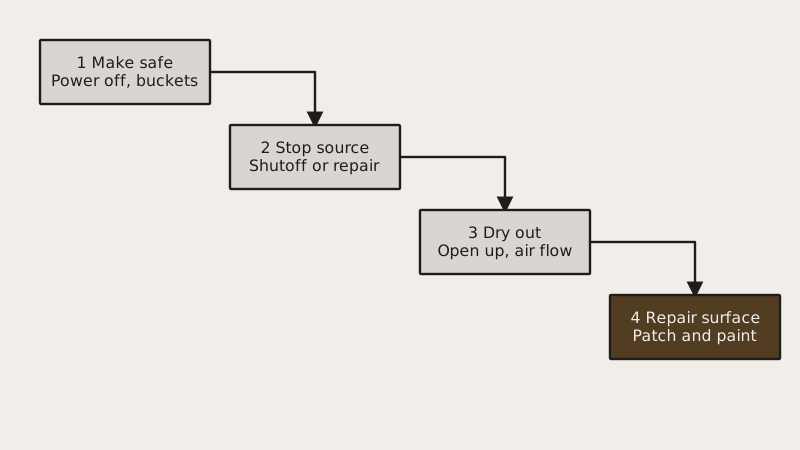
Stay out from under a dripping or bulging ceiling, cut the power to that room, and shut the water if a pipe is the source. Then contain what is falling, find where the water starts, and fix the source before touching the drywall or plaster. A patch painted over an active leak fails within weeks. For a pipe that has actually split, our burst pipe plumber page covers the emergency side.
The order matters more than the speed of any one step, so this guide follows the sequence: safety, shutoff, containment, source, drying, repair, and the point where a trade should take over.
What comes first when water is coming through?
Safety. Flip the room's breaker off if water is near lights or outlets, keep people and pets clear of any bulging patch, close the main if a pipe is the suspect, and set out buckets for the drips. Leave lights and fans off in a wet room until someone has checked the power.
In order:
- Power. Water and wiring are a lethal pairing. If a light fixture is dripping, switch its breaker off. If getting to the panel means standing in water, phone an electrician instead.
- Water. Close the main shutoff if the leak is steady or the source is unknown. Pasadena Water and Power says that valve generally sits where supply enters the house, and lists 626-744-4138 for water emergencies.
- Contain. Park buckets under drips, lay plastic sheeting or towels below, and shift furniture away.
- Release a bulge. Where the ceiling sags with trapped water, a small puncture at the low point lets it drain into a bucket, with you standing to one side. Trapped water is heavy and a collapse can injure you. If the bulge is large or you are unsure, stay out and call for help.
- Take photos. Your insurer will want to see the damage before anything is cleaned.
Then watch what the water does. A leak that quits when the main closes is a supply line. One that carries on afterward may be a drain, a heating or cooling line, or the roof.
How do I trace the source?
Let the room above and the timing guide you. A leak under a bathroom or kitchen, or one that appears when someone uses a fixture, usually comes from plumbing. A stain after rain points at the roof. A drip near an air handler or in a closet with a furnace can be a condensate line or a water heater.
Common sources in Pasadena homes:
- Upstairs bath or kitchen. A failed supply line, a drain connection, a tub overflow gasket or a toilet seal. Run each fixture and watch the ceiling below.
- Attic supply lines. Pipes up in the attic can corrode or work loose; attic and crawlspace plumbing explains the setup.
- A water heater upstairs or in the attic. Look for a leaking tank, a relief valve line or a drain pan that overflowed.
- Air conditioning. Pasadena summers run hot, and a plugged condensate line or full drain pan can spill into the ceiling below.
- Roof or flashing. A leak that only shows after rain. A roofer, not a plumber, handles it.
Check the meter to separate supply leaks from the rest. Close every fixture, then watch the meter's leak indicator, or follow the EPA's method of recording the reading and checking it two hours later with no water use. A moving meter means a pressurized supply leak somewhere. If the meter holds still, suspect a drain, a condensate line or the roof.
When a stain shows and no leak turns up, ceiling water spots with no leak lists causes such as condensation and old stains. A second checklist is in ceiling leak first steps, and warning signs of a failing pipe are in why pipes burst.
How do I repair the ceiling after the leak is fixed?
Fix the source first, dry the area completely, and only then repair the surface. Cut soaked or sagging drywall back to dry, solid material, let the cavity dry, hang new drywall, tape and finish the joints, seal with stain-blocking primer, and paint. A patch over wet material will stain and may grow mold.
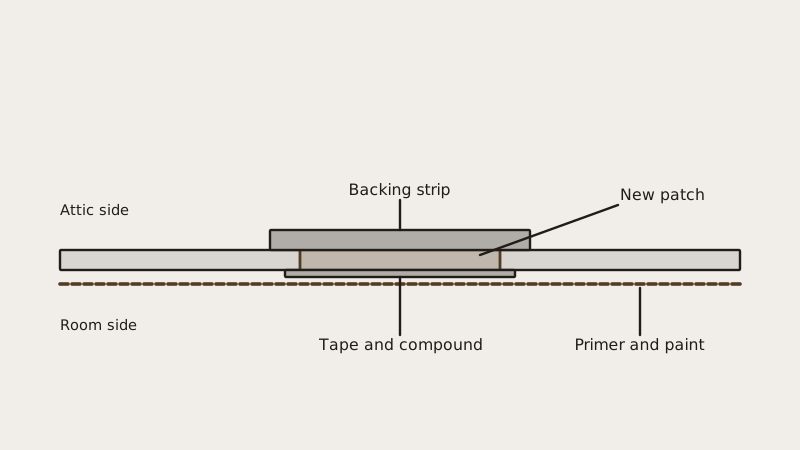
Basic steps for a drywall ceiling:
- Open and inspect. Remove wet or stained drywall back to a dry edge, wearing a mask and eye protection. Look for wet insulation, which must be replaced.
- Dry. Run fans and a dehumidifier until framing and insulation are dry. A moisture meter helps you confirm it.
- Cut a patch. Cut a neat rectangle, add backing strips, and screw in a new piece of drywall.
- Tape and finish. Apply joint tape and thin coats of compound, sanding between coats.
- Prime and paint. Use a stain-blocking primer, then paint the whole ceiling plane to avoid a visible patch.
The EPA's guidance fits: repair plumbing leaks promptly, dry everything completely, and accept that porous materials, ceiling tile for example, may be too far gone to keep once moldy. It says mold patches under about 10 square feet are usually a do-it-yourself job, and it advises calling a professional for damage from sewage or other contaminated water.
Older houses add a caution. Many Pasadena homes predate 1978, and under the EPA's renovation rule, anyone paid to disturb painted surfaces in such homes must be trained and approved in lead-safe work practices. The rule generally does not reach an owner working on their own home, though the EPA still recommends lead-safe methods and a trained contractor. Plaster-and-lath ceilings in Craftsman houses need more skill than drywall to patch, so many owners hire a plasterer.
When is it a plumber's job, and when is it a roofer's or another trade's?
A plumber fits when the source is a pipe, drain, fixture or water heater, or when nobody can find it. A roofer fits rain leaks, an HVAC technician fits condensate or coil leaks, and an electrician is needed if water reached wiring. A drywall or plaster trade finishes the surface once the source is fixed.
Plumbing leaks in a ceiling often mean the pipe is hidden, so a plumber may need to open a hole, test the line under pressure or use acoustic or thermal tools to locate the break. Pasadena's permit rules matter here. The City's exemption sheet says no plumbing permit is needed to stop a leak or repair a leak in a pipe, valve or fixture, but if a concealed pipe is defective and must be replaced with new material, that is new work requiring a permit and an inspection.
California law ties a contractor license to any job that reaches a thousand dollars or needs a permit. On a significant pipe replacement, get the license details in writing and settle who pulls the permit.
Price tracks access. A leak at a visible fitting is a minor repair, while one above the ceiling costs more because the surface has to be opened and patched. Burst pipe repair costs lists guide ranges, and burst pipe insurance covers why coverage often hinges on how sudden the leak was. Phone your insurer before major repairs.
To book, send the quote request; how it works lays out the steps. Requests are read Monday through Friday, nine to five, and the home page has our other plumbing work. If water is pouring in, begin with the emergency burst pipe page.
Can I keep it from recurring?
Treat the cause, not just the stain. Replace corroded supply lines, reseal fixtures, clear condensate lines, check the water heater and its pan, and inspect the roof before rain. Hold pressure in a safe range with a working regulator and learn where the main shutoff sits. Recheck the area after the first heavy use.
Hard water plays a part. Pasadena Water and Power's 2025 report lists hardness of 202 to 256 ppm, and old pipes, valves and appliances wear faster with mineral scale. Water heaters in attics deserve a drain pan and a line to a visible spot. For a pipe leak that has soaked the ceiling once, ask the plumber whether the rest of that line is in the same condition.
Common questions
Is this a DIY repair?
Cleanup and drywall patching are within reach once the source is fixed and the area is dry. Locating a hidden leak, replacing pipe and electrical work are different matters. If the source is a wall or attic pipe, or you cannot stop the flow, call a plumber. Paint over a live leak will fail.
What is the drying time?
It depends on how wet and how thick the materials are. Surface drywall can dry in days with fans and a dehumidifier, while insulation and framing in a closed cavity take longer. Do not seal the ceiling until a moisture meter or the plumber confirms it is dry, since trapped moisture grows mold.
Does a stain with no drip mean a leak?
Maybe. A brown ring can be an old, dry stain from a past leak, but it can also be a slow active leak or condensation. Press the spot, since soft drywall means active moisture. Trace the edge in pencil and look again in a few days; if it grows, find the source.
Should the water be shut off at the main?
If the source is unknown or the leak is steady, yes, close the main and then investigate. If the flow stops, a pressurized line was the cause. If it continues, think drain, condensate line or roof. Cut power to the room if water reaches lights or outlets.
Will insurance cover the ceiling?
Possibly. Plenty of policies pay for damage from a burst or sudden accidental leak but may exclude the pipe itself or slow seepage. Terms differ, so read your policy, phone your insurer early, take photos and keep receipts. The exact terms of your own policy are what count.
Sources
- U.S. EPA, mold cleanup in your home (fix leaks promptly, dry completely, 10 square feet, porous materials)
- U.S. EPA, Renovation, Repair and Painting program (homes built before 1978)
- U.S. EPA WaterSense, Fix a Leak Week (meter leak test)
- Pasadena Water and Power, water troubleshooting (main shut-off valve, emergency line)
- City of Pasadena Building and Safety Division, work exempt from permit
Page updated