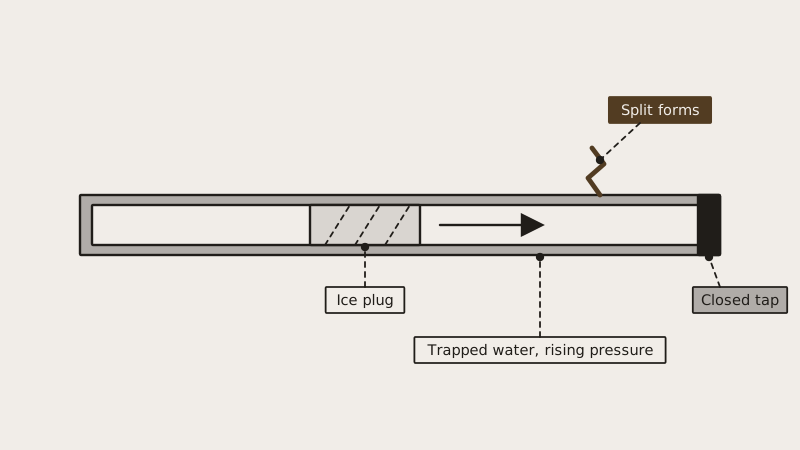
Pipes burst when the force inside or around them exceeds what the wall can take. The usual triggers are water pressure that runs too high, corrosion that thins the metal, freezing, shifting soil or framing, and plain age. In Pasadena freezing is the rarer cause and pressure, corrosion and old materials are the common ones. If you are in the middle of a break, go to our burst pipe plumber page.
The causes below come with the signs that usually appear first, so you can catch a failing line before it floods a wall.
What makes a pipe split open?
A pipe bursts when stress beats strength. Stress arrives as internal pressure, surges, freezing water or movement. Strength drains away through corrosion, scale, thin walls, a bad joint or old material. Most failures involve both: a weakened spot meets a pressure spike and the wall gives, often at a fitting or a pinhole.
Five causes cover most cases in the San Gabriel Valley:
- High pressure. Supply pressure beyond what the plumbing is rated for strains every joint, and a failing regulator is a frequent culprit. Our water pressure and valves page explains how to check it.
- Corrosion. Galvanized steel rusts shut from the inside, and copper can develop pinholes. EPA research on water mains notes that corrosion can cause pipe failure and leakage. Cast iron drains lose strength even without visible change.
- Water hammer. A valve that slams shut throws a shock wave along the line, and repeated shocks fatigue old joints. The water hammer guide describes the sounds to listen for.
- Freezing. Water expands as it freezes and can split metal or plastic pipe. Outdoor hose bibs, sprinkler lines and pipes in unheated garages, attics and crawlspaces are the exposed spots.
- Movement. Settling, earthquake shaking and tree roots can pull on pipe or crush buried lines.
Material matters. Some plastic plumbing installed in the 1970s to the 1990s has a bad track record, covered in our page on polybutylene. The newer choice, PEX, is more forgiving, and the trade-offs appear in PEX versus copper.
What makes pipes burst in winter, even in mild Pasadena?
Water expands as it freezes, squeezing the pipe from inside until it splits. Pasadena rarely sees hard freezes, so winter bursts here are uncommon and strike exposed lines: hose bibs, irrigation pipe, and runs through unheated garages, attics and crawlspaces during a rare cold snap, mostly in the foothills.
The Red Cross lists the same weak spots: outdoor hose bibs, sprinkler lines and supply pipes in unheated spaces such as basements, crawlspaces, attics and garages. Their advice: insulate those pipes, and keep indoor rooms warm in a freeze.
Cold weather has a second effect even without frost. Water heaters run harder, and heating water inside a sealed plumbing system can push pressure upward. If a relief valve drips or pipes knock when the heater cycles, check pressure and the expansion tank before blaming the cold. Foothill homes in Altadena and Sierra Madre sit higher than the valley floor, so they have a better chance of a freeze than a house near Old Pasadena.
Should a line freeze, thaw it slowly with warm air from a hair dryer, never a torch, and leave the faucet open so melting water can run. A visible split means the main shutoff gets closed right away.
Can a pipe burst in summer?
Yes. Summer failures usually trace to high pressure, thermal expansion and aging pipe. Heavy irrigation demand means sprinkler valves cycle often and send surges down the line, and heating water in a closed system builds pressure when no expansion tank absorbs it. Weak joints in old pipe fail first.
None of this is proven for any one house, so look for evidence. About 80 psi is the usual ceiling in plumbing codes, and a cheap gauge threaded onto an outdoor spigot answers it in half a minute. A reading that creeps upward overnight points to a failing regulator, and a dripping heater relief valve is another clue.
Soil movement is a possible extra factor on buried lines. I think it matters less than pressure, so check pressure first.
Pasadena Water and Power's supply is hard, 202 to 256 ppm in 2025, so scale builds inside old pipe and fixtures. Scale narrows the bore, raises velocity and can let corrosion work under it. Hard water is not proof of a leak, but older copper and galvanized lines pay for it over decades.
Which signs warn of a leak or a burst?
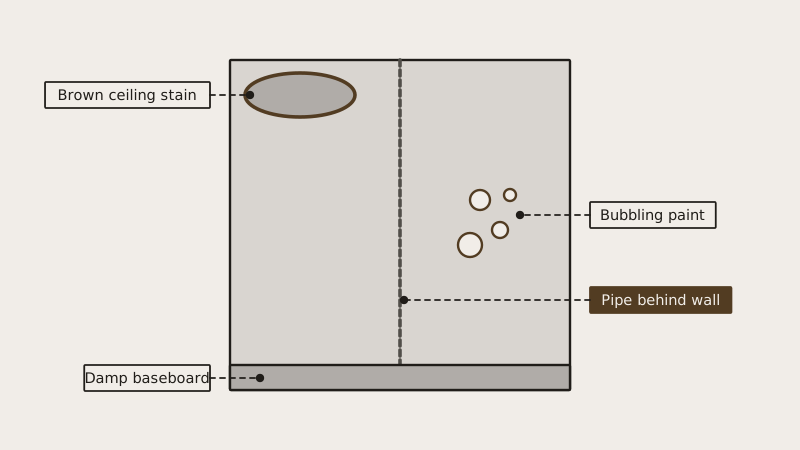
Watch for a meter dial that turns though every tap is closed, a water bill that suddenly jumps, running water heard in a silent house, damp or warped baseboards, musty smells, weak pressure, and stains on walls or ceilings. A full burst is louder: hissing, spray, pooled water or flow that suddenly drops.
The meter can expose a hidden leak. The EPA method: write down the reading, leave the water alone for two hours, then read once more. Any change means water is escaping. For a quicker check, keep an eye on the tiny indicator on the meter face while every tap stays off. Our guide on telling if a pipe has burst goes through more clues, and an unexplained bill is the topic of why your water bill jumps.
If you see a burst, do this in order:
- Close the main shutoff. Pasadena Water and Power says it generally sits where the supply enters the house, and the utility's water emergency line is 626-744-4138.
- Open the lowest faucet so the pipes drain.
- Turn off the water heater, and kill power to any soaked zone you cannot safely reach.
- Move belongings out of the way, mop and set fans running.
- Photograph the damage for insurance, then call a plumber.
Water and electricity are a dangerous mix. Stay out of rooms with pooled water if outlets or fixtures are submerged, and never touch a wet electrical device.
What does a ceiling leak look like?
Look for a brown or yellow stain that keeps growing, a sagging or bubbling patch, peeling paint, drips, a musty smell and mold specks. A stain beneath a bathroom or water heater suggests plumbing, while one that appears after rain suggests the roof. Soft drywall under your thumb means the leak has run a while.
Hunt for the source. Upstairs bathrooms, attic supply lines, a heater closet and an air conditioner drain pan are the usual suspects here. Run the suspect fixture while watching the ceiling, or check the meter with the house shut down. A drip that shows only when the upstairs shower runs implicates the drain or trap, and one that never stops implicates pressurized supply.
Do not poke a bulging ceiling without a bucket and a plan, since trapped water is heavy and can bring down a section. Release it into a container only if you can do so from a safe position. For repairs, see ceiling water leak repair. If the stain shows up with no leak in sight, water spots on the ceiling without a leak lists the other causes.
The EPA advises fixing plumbing leaks as soon as possible and drying everything completely, and treats mold over roughly 10 square feet as a reason to bring in a professional. Soft, porous items such as ceiling tile can be too far gone to save once mold sets in.
What comes after the pipe has burst?
Stop the water, protect people, then call a plumber, and let your insurer know. The plumber finds the break, repairs or replaces the section, and checks the cause so it does not repeat. In Pasadena, stopping a leak needs no plumbing permit, but replacing concealed pipe does, so expect a permit on larger repairs.
Repair cost depends on access. A visible fitting is cheap; a break behind drywall or below concrete costs much more because someone must open the surface and patch it afterward. See what fixing a burst pipe costs for guide ranges, and the insurance question for what policies usually cover.
Before anything permanent goes up, dry the area, check for hidden moisture, and ask the plumber to look for the underlying cause, whether pressure, corrosion or a failed fitting. A repair that skips the cause leaves the next burst waiting. Book through the quote request, read how it works, or start over from the home page.
Common questions
How do I stop pipes bursting?
Hold pressure in a safe range with a working regulator, insulate pipes in unheated spaces, replace aging galvanized or failing plastic lines before they leak, drain outdoor spigots ahead of a freeze, and learn exactly where your main shutoff is. The prevention guide lists the full routine.
Is a pinhole leak the same as a burst pipe?
Not quite. A pinhole is a small corrosion break that sprays or weeps, while a burst is a larger split. Both mean the pipe wall is failing. Pinholes in copper often appear in clusters as the line ages, and that is a sign to price a repipe rather than patching one hole at a time.
Can a quake split pipes?
Shaking can crack pipes, loosen joints and shear gas or water lines, especially where they join the house or the water heater. After a quake, look for leaks, and if you detect gas, step outdoors and phone SoCalGas, 1-800-427-2200. Strapped heaters and flexible connectors limit the damage.
Is a plumber still needed if the leak stopped by itself?
Yes, get it checked. A leak that quits may only have slowed or moved, and moisture can keep spreading inside the wall. A pressure test of the line can reveal the cause, while waiting lets hidden damage and mold build up unseen.
Whom do I phone about a break in the street?
Water bubbling up in the street is the utility's side. Pasadena Water and Power lists 626-744-4138 for water emergencies. If the water is inside the house, or the meter keeps running after you close the house valve, the trouble may be on the owner's side of the meter, so a plumber is who to phone.
Sources
- American Red Cross, preventing and thawing frozen pipes
- Pasadena Water and Power, water troubleshooting (shut-off valve, emergency line, pressure)
- Pasadena Water and Power, 2026 water quality report (2025 data)
- U.S. EPA WaterSense, Fix a Leak Week (meter leak test)
- U.S. EPA, mold cleanup in your home (drying, when to hire a professional)
- City of Pasadena Building and Safety Division, work exempt from permit
Page updated