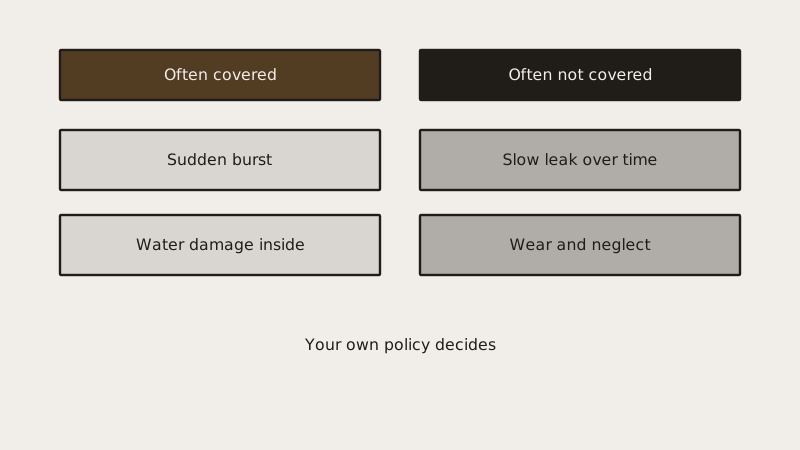
Most homeowners find that a sudden burst is covered for the resulting water damage, within the policy limit and after the deductible. The failed pipe, and harm from a leak that dripped for weeks, frequently is not. Wording differs between policies, so ask the insurer directly, and turn the supply off before anything else. Nothing here is insurance advice. It describes what to expect and which mistakes weaken a claim. If a pipe has just failed, the burst pipe plumber page and the emergency steps come first.
Does a homeowners policy pay when a pipe bursts?
Typically the water damage that follows is, provided the burst was abrupt and unintended. Agents and restoration firms describe standard California homeowners policies like this: the ruined drywall, flooring and belongings are covered, while the failed pipe itself and the cost of reaching it may or may not be. Check the wording for your own policy.
California's insurance regulator says homeowners policies do not cover flood damage but do cover other kinds of water damage, which is the reason a burst indoor pipe is treated differently from rising water outside. Where the policy draws its lines is in the details: the cause, the timing and what you did afterward. A copper pipe that splits during a night is the textbook sudden event. A pinhole that misted a wall cavity for months reads as gradual, and that gap is where many disputes begin. Deductibles matter too: the department describes the deductible as the portion of the loss you pay before the company begins to pay.
What is usually not covered?
Policies commonly exclude damage from slow or long-running leaks, from wear, corrosion and poor maintenance, and from flood. Sewer or drain backup and water entering from outside typically need an extra endorsement. The cost to repair the pipe itself is often your own expense. Exact terms vary by policy.
Read the exclusions with a pen. Look for words like "continuous or repeated seepage," "wear and tear," "deterioration," and "backup of sewers or drains." Also look for any limit on water damage or mold. The Department of Insurance notes that moisture left in a house lets mold develop, and that drying wet areas and dehumidifying help limit it, which is a duty as well as a good idea. An empty house can raise its own questions, so ask the insurer if that fits you. When a leak is hidden, a plumber's leak detection can find the source and estimate its age; see signs of a burst pipe and burst water pipe causes.
Which steps in the first hour protect a claim?
Close the water supply, make the area safe, photograph everything before it is moved, and tell your insurer without delay. The state insurance department advises stopping leaks at the source straight away and reporting water damage claims at once. Hold on to receipts for emergency repairs.
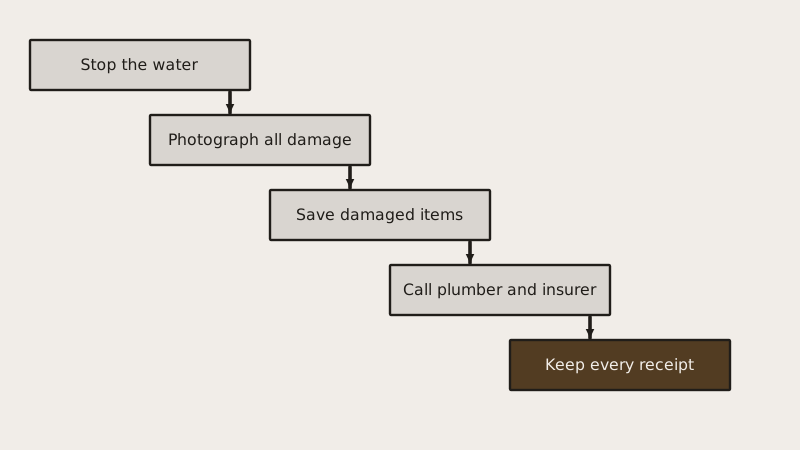
Step by step. Close the main valve; if it will not close, Pasadena Water and Power takes emergency calls on 626-744-4138. Cut power to wet areas only where that can be done safely. Photograph and video the source, the wet rooms and damaged belongings, with a wide shot and close-ups. Move what can be saved, but do not throw away damaged items until the adjuster says you may. Start drying with fans and open windows. Phone the insurer or agent and ask what the policy covers, how long processing takes, whether repair estimates are needed and what the deductible is. Log every call. The department states that reasonable protection costs are reimbursed when you keep receipts, and that later damage may go uncovered if you took no reasonable steps to prevent it.
Who gets the first call, the plumber or the insurer?
Both, and fast. The plumber stops the water and fixes the pipe while the insurer opens the claim. Never wait for an adjuster while water is running, though do get the adjuster's instructions ahead of big permanent repairs, since the insurer may want to inspect first.
That is the sequence the Department of Insurance recommends: temporary repairs to prevent more damage, then waiting for the adjuster's visit before committing to major permanent work. Ask the plumber to save the failed section of pipe where possible, since it shows how the pipe failed, and to write the invoice with the date, the location and the cause in plain words. Collect written bids from a contractor with a current California license, with materials and prices itemized; the state board runs a license lookup. Be careful with anyone who pressures you into costly temporary work, because temporary repair payments count toward the total settlement. Typical ranges to compare bids against are in what fixing a burst pipe costs.
How can a plumber's paperwork help the claim?
A clear invoice and report record the failure, its cause, its location and the repair, which helps tell an abrupt burst from a long leak. Ask for the date and time of the visit, a description of what failed and why, photos, and an itemized charge for stopping the leak and for the permanent repair.
If the plumber also checks for other weak points, such as old galvanized sections or high pressure, put that in writing as well. It may help later, and it tells you whether the same thing could happen again. Where the cause is a worn run of pipe, the plumber may recommend repiping, which insurers generally treat as maintenance rather than something they pay for. Leaks that appear as stains on a ceiling can be traced with the help of ceiling water leak repair.
What if I rent, own a condo or my claim is denied?
Tenants tell the landlord at once and turn to their own renters policy for belongings. Condo owners compare the association's master policy with their own cover inside the unit. After a denial, request the reason in writing; the state insurance department's consumer hotline is 1-800-927-4357.
A denial need not be final. The department says a hotline officer may review a complaint and, where fitting, send a form so it can look into it. A first payment is often an advance and not the final one, and in most cases you can reopen a claim if more damage is found later; tell your insurer immediately when you find additional damage. Photographs, receipts and the plumber's written report are the evidence that carries the most weight.
Common questions
Does filing a burst pipe claim push premiums up?
It can, but it depends on your insurer, your history and the size of the loss, and no rule fits every policy. Ask your agent before you file about how a claim is treated, and weigh that against the repair cost and your deductible. Do not delay reporting a large loss.
Does the insurer reimburse the plumber's invoice?
Often the plumber's work to stop the leak is covered as reasonable emergency protection, while the permanent repair of the failed pipe itself may be excluded. Find out from the insurer which lines of the invoice qualify before work is done, and keep itemized receipts for both.
What if the pipe let go while nobody was home?
Report it the moment you find it and close the water supply. Some policies treat long absences differently, so check yours. A neighbor or the plumber can document the scene and the cause. Leaving water on during weeks away raises the risk, and a leak sensor or closing the main before travel helps.
What about water that comes up through a drain?
Usually that needs a backup endorsement. Wastewater rising through a drain is commonly excluded from the base policy, and sewer problems in older Pasadena houses can be costly. Read the exclusions and ask your agent whether the add-on is worth having.
A repair request begins on the quote form. Our service area is on where we work, and the home page lists other plumbing services.
Sources
- California Department of Insurance, Residential Property Claims Guide
- Pasadena Water and Power, troubleshooting and water emergency hotline
- Contractors State License Board
- Published guides by California insurance agents and restoration firms on water damage cover, checked November 2026
Page updated