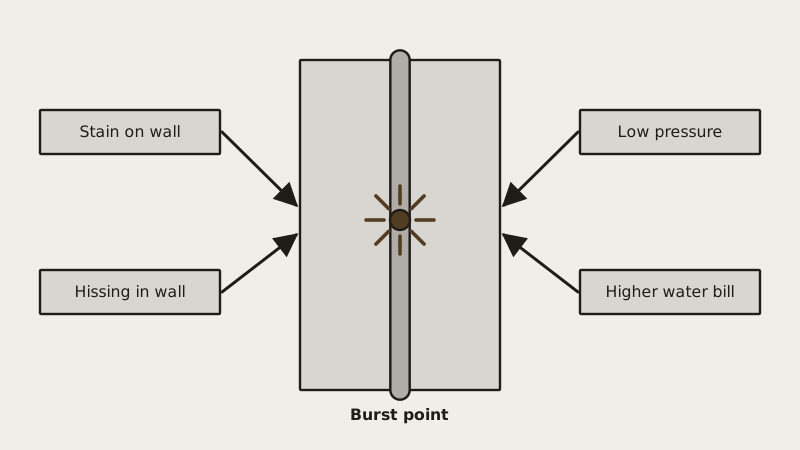
A burst pipe usually shows itself in one of five ways: water noise in a silent house, pressure that suddenly sags, a wet or discolored patch on a wall, ceiling or floor, brown tap water, or a meter dial that will not sit still. Spot any of those and shut the main valve before you investigate. The leaks and burst pipes guide shows the sequence after that, and the quote form gets a plumber visit moving.
Which symptoms point to a burst pipe?
Listen for water with nothing running, feel for pressure that falls at every tap, look for a damp or stained surface that was dry yesterday, notice murky or rust-colored water, and check whether the meter turns while nobody is home. One symptom might be a fixture. Two together almost always mean a pipe.
Here is how each clue tends to show up:
- Sound. Hissing, trickling or drumming inside a wall while the house is quiet. Older Pasadena homes with plaster walls tend to carry that noise a long way.
- Pressure. Showers weaken and faucets sputter. Weak flow has other causes too, and why water pressure runs low in Pasadena helps you tell a broken pipe from a tired regulator.
- Surfaces. Bubbling paint, a soft patch of baseboard, a warm spot on a floor over a hot line, a ceiling stain that keeps growing.
- Water quality. Brown or gritty water right after pressure drops can mean corroded steel, or debris stirred up during the break.
- Meter and bill. A bill that leaps even though your routine stayed put is worth chasing. Start with why a water bill climbs.
Can the water meter prove I have a leak?
It can. Stop all water use, ice maker and sprinklers included, and note the meter. Return two hours later with nothing used and read it again. Any change on the dial, or on the small low-flow indicator, means water is getting out of the pipes in the stretch of plumbing you own. EPA WaterSense recommends this same test.
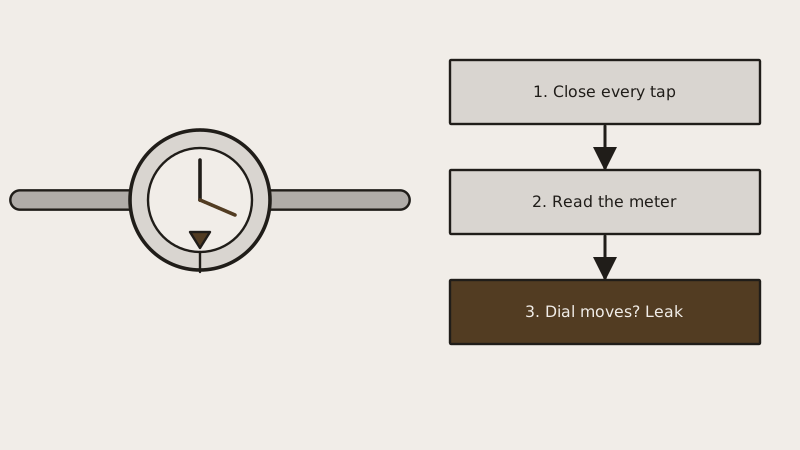
Many residential meters carry a small low-flow indicator, a wheel or triangle that spins at the slightest trickle, so watch it if the main dial barely moves. Next, shut the house valve and watch the meter again. A stopped meter puts the break indoors. A meter that keeps spinning puts it in the buried run between meter and foundation, and a plumber pins that down with listening equipment. More on outdoor failures sits in a burst water pipe in Pasadena.
Could the break be under the house?
Yes. With a raised foundation, a break appears as soggy soil, a musty smell, soft or bouncy floors and a meter that runs. With a slab, the clues are quieter: a warm patch of flooring, a hiss in a silent room, or a bill nobody can explain. Neither is easy to confirm without opening something, so a plumber normally listens first.
A crawlspace lets you do some of the detective work. Bring a flashlight and old clothes, and scan the pipes for drips, crusty mineral deposits, soaked insulation or damp dirt right beneath a joint. Stay out if water stands near any wiring. Slab houses, which are common in postwar Pasadena, call for electronic detection, and costs and methods get their own page: slab leak repair or repipe.
What if the leak is behind drywall or plaster?
Let the sound, the stain and the meter guide you. A stain that starts near the baseboard or ceiling line and keeps spreading traces the route of the leak, and a flat palm on the surface often finds cool dampness. Plumbers carry moisture meters that give a reading in place of a hunch.
Turn off the main valve and let the lowest faucet empty the line, which starves the break while you decide. A small test cut in drywall makes sense only when you know roughly where the pipe runs and you are ready to patch the hole. Beyond that the plumber chooses a small access opening and repairs that section. Typical bills are in what a burst pipe costs to fix.
What can I do about a dripping plastic pipe joint?
Shut the water off, dry the joint and examine it. A glued PVC or CPVC joint that weeps will not respond to tightening, since the solvent weld itself has let go. A rubber-lined repair clamp of the correct size, or a self-fusing silicone tape, may slow the seep for a day or two. The lasting repair is a new coupling.
PEX tubing uses crimp or clamp rings, and a ring that backed off can sometimes be re-clamped with the proper tool. A threaded plastic fitting that drips usually needs fresh thread tape and a gentle quarter turn, never a hard crank that cracks it. For each plastic type in turn, see our piece on stopping water leakage from plastic pipe. Replace any clamped joint on a live supply line soon.
Where does DIY stop and the plumber start?
Book a plumber if the break sits under the floor or inside a wall, if it is on a main line, if the galvanized steel crumbles when touched, or if you cannot get the water off. Owners may repair a visible pipe at their own home. A lasting fix on a live line still needs proper fittings and a pressure test.
Anything priced at $1,000 or more, counting both labor and parts, belongs to a contractor with a state license, according to the CSLB. Pasadena's Permit Center handles plumbing permits, and the plumber normally files for them. When we arrange the visit, the plumber who arrives prices the job on paper before cutting anything and separates repair from replacement. Pasadena Water and Power measured hardness at 202 to 256 parts per million for 2025, and scale builds inside old pipe, so ask how the rest of the line looks.
Common questions
How can I tell a slow leak from a full burst?
A slow leak turns up in the meter test and in small clues: a creeping stain, a musty smell, mineral crust on a joint, a floor that feels slightly warm. A burst is loud and fast. Both ruin materials, so run the meter test on any creeping stain. The earliest burst pipe signs are listed separately.
Is a burst possible with nothing wet in sight?
Yes. Water can hide for days inside framing, beneath concrete or deep in soil. Watch for a meter that turns in an idle house, a steady hiss or a damp smell. Drywall bubbles and warps once it saturates, so shut the main valve and phone for help well before that stage.
Is a banging pipe a sign of an imminent burst?
Rarely. That thump when a faucet snaps shut is water hammer, a pressure shock traveling through the line. Repeated shocks do wear joints, and loose straps amplify the noise, but it is not a burst. A regulator or hammer arrestor often cures it. Compare symptoms in the water hammer sound guide.
What comes first once I have found the burst?
Turn the main valve clockwise to close it, empty the lowest tap, switch the water heater off, carry belongings out of the wet zone and take photos for the insurance claim. Phone a plumber after that. Where wiring is wet, stay clear of the water and leave the breaker alone. The emergency burst pipe page explains urgent visits.
How can older Pasadena plumbing be protected from bursts?
Wrap exposed pipe in attics, crawlspaces and outdoor runs, swap brittle supply connectors, keep pressure moderate with a working regulator, and have corroded galvanized steel assessed. Foothill homes should cover hose bibs on frosty nights. Preventing a pipe burst has more.
Other jobs we can set up are on the Pasadena Pipe Works home page.
Sources
Page updated