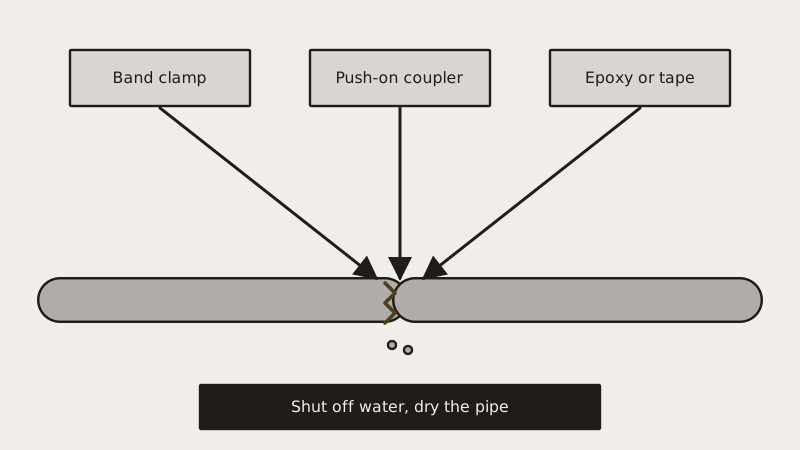
Close the valve, dry the pipe, and pick the patch that suits the plastic: a rubber-and-steel band for a small split, a slip or push-on coupler in place of a cracked section, or fresh primer and cement for a bad glued joint. Treat every patch as a stopgap until a plumber looks at it. We arrange visits across Pasadena and the San Gabriel Valley, and our other plumbing services start at the plumber home page. If the water will not stop at all, go to the burst pipe emergency page.
Can a leaking plastic water pipe be stopped without a plumber?
For a short time, yes. You can shut the supply, drain and dry the pipe, then bridge a small split or a weeping joint with a repair band, a push-on coupler or a section of new pipe. Anything that stays under pressure for weeks, or sits behind a wall, deserves a professional repair.
What you are really doing is buying time. The leak stops, but the reason it happened remains: a joint cemented in cold weather, a pipe stressed by water hammer, a run pinched against a stud, or plastic that has simply aged. Photograph the damage before you touch it, because a plumber can read a lot from where and how a pipe let go. Our pages on the signs a pipe has burst show what else to check while you are there.
What are the steps to stop the leak?
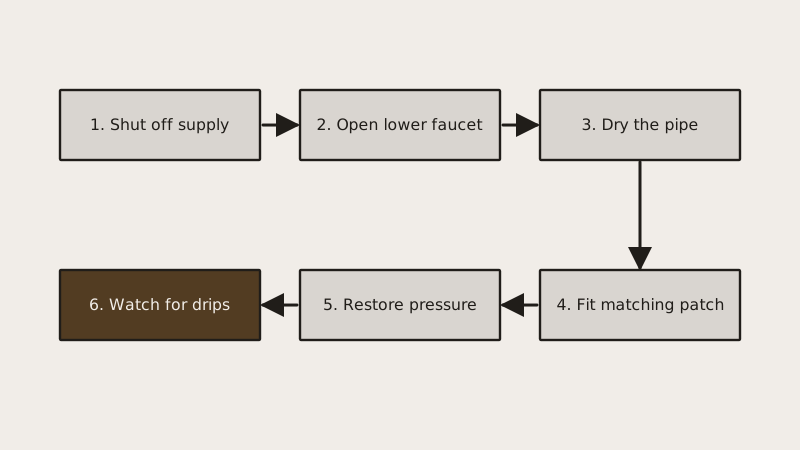
Cut the supply at the main or the nearest stop, open a faucet lower than the leak so the line drains, and wipe the pipe bone dry. Clean the damaged spot, choose a patch that matches the plastic, fit it as the packet instructs, then bring the pressure back gradually while you watch for drips.
Details that decide whether it holds. Drying matters: tapes, epoxy and cement stick to dry surfaces only. A band clamp wants a clean, round, undamaged stretch of pipe about a hand's width either side of the split. Push-on couplers need the pipe cut square and the burrs removed, and they are rated for specific materials, so read the label to confirm they suit your pipe. Solvent cement works only on the matching plastic and needs the cure time on its own can before the line is pressurized. Crack the valve a quarter turn first so trapped air escapes and any weak spot shows.
What are new water pipes in a house made of?
Most new residential water lines are copper, PEX (cross-linked polyethylene) or CPVC. California adopted PEX into its state plumbing code in 2009, and copper remains the other common choice. PVC is used for drains and cold-water irrigation, while polybutylene, a gray plastic used decades ago, is no longer installed.
Why it matters when patching: the repair part has to be made for your pipe. PEX takes crimp, clamp or push-fit fittings; CPVC takes its own cement and primer, and it grows brittle with age; PVC cement should not be used on a PEX line at all. Not sure what you have? Cream or yellowish rigid pipe is usually CPVC, flexible pipe in red, blue or white is usually PEX, and gray flexible pipe in an older house may be polybutylene. Our page on polybutylene pipe explains why that last one is a worry, while PEX versus copper sets the two modern options side by side.
What if the plastic pipe leaking is outside the house?
Outdoor plastic pipe is usually irrigation line, a hose-bib feeder or a buried supply, and sun and soil movement crack it. Shut the sprinkler zone valve or the main, uncover the damage, trim out the cracked piece, and join new pipe in with a coupler made for that plastic.
Pasadena sunshine is hard on exposed PVC, so look for chalky, faded, or crazed plastic along the whole run, not just at the split. A single crack often means more are coming. Roots and shifting clay soil crush buried lines, and in foothill yards a slope can drag a pipe slowly out of line. Whatever you do, call before you dig: California's Dig Alert system (811) exists for exactly this, and it is free. If the buried pipe is the stretch feeding the house from the street meter, ask the plumber before cutting it, because the meter and the utility's side of the connection are not yours to work on; in Pasadena that utility is Pasadena Water and Power.
How do I stop a leaking tap?
A dripping tap is rarely the pipe. Close the small stop valve beneath the sink, then inspect the packing nut, the washer or cartridge, and the supply connections. Tightening a nut a quarter turn or swapping a worn washer fixes most drips, and the plastic supply line gets replaced rather than patched.
The spot where water appears names the culprit. Dripping spout: cartridge or washer. Wet handle base: packing or an O-ring. Puddle in the cabinet: supply line or its nut. Braided supply lines are cheap and take minutes to swap, but hand-tighten and add a small turn only, since overtightening cracks plastic fittings. Step-by-step help is in a general leaky faucet fix and the walkthrough for a leak beneath the sink; garden spigots have their own guide, leaky outdoor water faucets.
How long before house water pipes wear out?
No calendar date applies, since material and water chemistry both count. As rough guides from repiping contractors, galvanized steel lasts 20 to 50 years, copper 50 years or more, PEX around 40 to 50, and polybutylene only 10 to 15. Replace sooner when leaks repeat in more than one spot.
Pasadena sits in hard water territory, which is relevant for copper and scale: the water utility's 2025 report listed average hardness around 222 parts per million, in the very hard range. Pinholes in copper, rusty water from galvanized lines and reduced pressure from scale-narrowed pipe are the three signs that the plumbing is tiring out. Many Craftsman and mid-century homes here still have some galvanized, so a plumber who specializes in older houses is worth the call. Read why a house gets repiped and what repiping costs before you decide.
Who actually fixes water pipes, and which jobs are not DIY?
That is a plumber. California expects plumbing to come from a contractor with the proper license, and the state's licensing board lets anyone look a contractor up. Walls, the main line, permit jobs and gas piping all go to a plumber.
Gas is the line a homeowner never crosses: no cutting, repairing or testing gas pipe. A gas smell sends you outdoors before anything else, then to SoCalGas, with 911 for any immediate danger. On the water side, a confident homeowner can handle surface repairs to reachable pipe, while everything inside walls, under slabs or ahead of the shut-off is for the pros. Booking a visit starts at the quote form; add the pipe material, if you know it, and where the leak sits. We cover the communities listed on the areas we serve page, from Altadena to Diamond Bar.
Common questions
Is a patch enough, or must the pipe be replaced?
Often, for a short time. A clamp over a small split, a repair coupler across a cracked section, or fresh cement on a bad joint can all stop the water. They are temporary. If the pipe is old, brittle or has leaked before, plan on replacing that run so the leak does not return in a wall.
What can I put on a leaking plastic pipe in an emergency?
Self-fusing silicone tape or a rubber-and-steel clamp will slow a small leak for hours. Epoxy putty can hold a pinhole on a dry pipe. None of these is rated for lasting pressure repairs. Shut the water off while you work, and treat the patch as a way to get through the night.
How can I tell what my pipes are made of?
Look where pipes enter the water heater, under sinks and in the garage or crawlspace. Gray metal that attracts a magnet is steel, orange-brown is copper, and plastic is cream, white, red, blue or gray. Markings printed on the pipe name the material, such as PEX, CPVC or PB for polybutylene.
Does patching a pipe need city sign-off?
Patching one spot on an existing pipe generally does not, but replacing a run, a water heater hookup or the main line often does, and rules differ by city. Pasadena has its own Permit Center, and each neighboring city keeps a separate counter. Whoever does the work will know which office to go to.
Sources
Page updated