Glendora covers nearly 20 square miles on the foothills of the San Gabriel Mountains, with about 18,600 housing units at an elevation near 774 feet. Compared with the flat cities to its west, it is bigger, hillier and less uniform, so what a plumber meets here depends heavily on which street you live on. We arrange the visit anywhere in the city, and the areas page shows how Glendora fits with its neighbours.
Which company supplies my water in Glendora, and does it matter?
It matters. The City of Glendora Water Division serves most addresses with a blend of Main San Gabriel Basin groundwater, filtered surface water and imported Metropolitan Water District supply. A slice of the city is instead on Suburban Water Systems, so a neighbour a few streets over may get a different supplier and a different report.
On the city's 2023 report, groundwater hardness averaged about 200 mg/L, with readings from 120 to 360. At 17.1 mg/L per grain, the average is nearly 12 grains per gallon and the top reading is above 21. Glendora is therefore one of the harder spots in the foothill belt, and the spread explains why two neighbours report different amounts of scale.
Check the name on your water bill, then read that supplier's annual quality report. Where hardness is high, a softener can pay for itself in longer appliance life, and the softener installation cost guide puts a range on it. For a water heater, hardness is the main reason sediment builds in the tank, and the heater replacement guide covers when to swap rather than flush.
What was Glendora built from, and what pipes does that leave?
Glendora grew up as a citrus town. At its 1947 peak, local orange and lemon orchards covered more than 5,000 acres and six packing houses handled about 78,000 tons of fruit a year. Glendora was incorporated in 1911. Postwar subdivision replaced the groves, and Glendora Village still holds the older core.
For plumbing, that means three layers. Pre-war cottages near the Village can still have galvanized steel feeding the fixtures, with iron or clay in the ground. Postwar ranch houses, the largest group, usually have copper and cast iron. Hillside custom homes from later decades could have copper, PEX, or both, sometimes with long runs because the water heater sits far from the bathrooms.
Long runs have a consequence: it takes longer for hot water to arrive, and a recirculating pump or a closer heater can fix it. A heater that has quit entirely is a separate fault, covered under no hot water at all, so say which you have.
How does the foothill terrain change plumbing in Glendora?
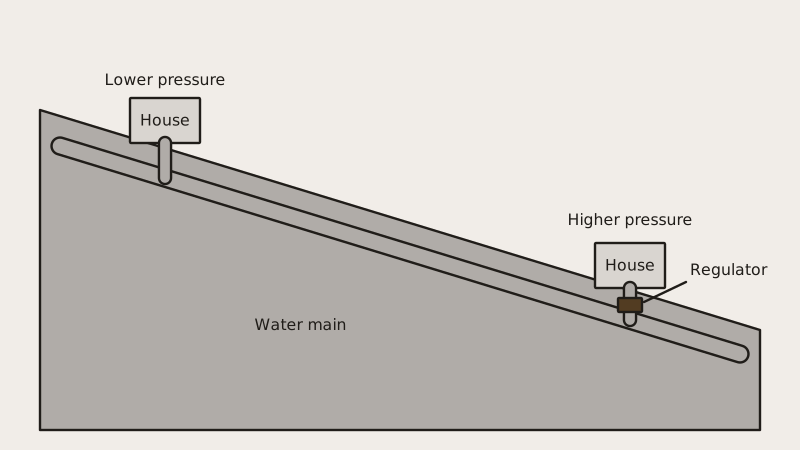
Terrain changes water pressure and drain behavior. Streets that climb toward the mountains sit at different elevations, so static pressure in the main can differ from block to block, and a home at the foot of a slope can sit near the top of what fixtures tolerate. A pressure regulator at the meter protects the house, and how to adjust a regulator valve shows what the screw does.
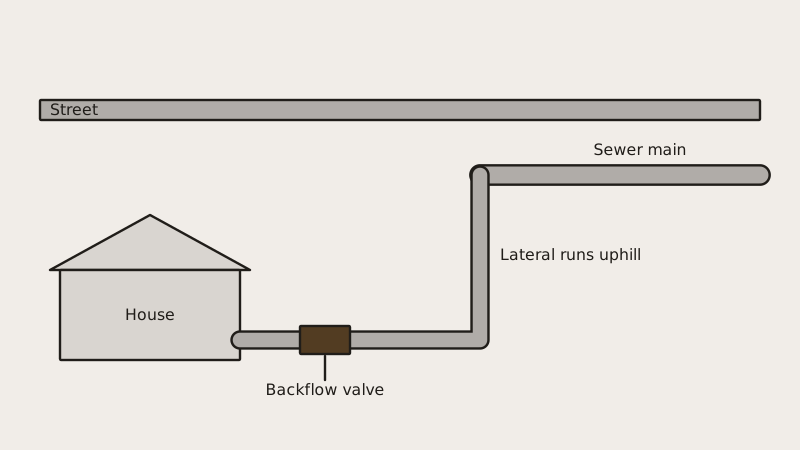
Slopes also affect sewers: laterals on a grade flow faster, but a house below the street may have a sewer that runs uphill to the main and needs a backflow device. If you notice a slow drain at the lowest fixture whenever the main is busy, mention it. Our sewer smell guide lists related causes.
Foothill summers also get hot and dry, and landscaping irrigation is a significant draw on water lines. Old pressurised irrigation tied into the house line is a common leak source worth a look when the bill climbs, and the guide on water bills that jump shows how to trace it.
What permits does a plumbing job in Glendora need?
Glendora's Community Development Department runs plan and permit applications through its Building Division. The city's application worksheet has a water heater section covering tank, tankless and solar options, and heater replacements are generally permitted work, so ask the division what your job needs before the heater goes in.
Gas lines, main-line work and sewer laterals belong to a contractor, and the contractor pulls the permit. Any job pricier than $1,000 once parts are counted must go to a person with a contractor license, and the state board has a lookup page. Smelling gas means walking out first; SoCalGas is on 1-800-427-2200.
What should I expect to pay for plumbing in Glendora?
Regional guides publish hourly and per-job ranges, but Glendora has no local price list. Larger lots and long pipe runs add time and materials. What you are held to is the written quote, which arrives after the site visit.
If your pipes are failing in several places, the repipe cost guide shows the scale. Call on a weekday from nine to five or use the quote form with your address, the symptom and a photo. How it works explains each step, with the rest of our services on the home page.
Common questions
Is Glendora tap water hard?
Mostly, yes. The city's 2023 report shows groundwater hardness averaging 200 mg/L, ranging from 120 to 360, which is roughly 12 grains per gallon on average. Some addresses are on Suburban Water Systems instead, so your numbers follow your street. Read the report for the supplier on your bill.
Is there a permit for swapping a heater in Glendora?
Usually. The Building Division issues plumbing permits, and its worksheet has lines for tank, tankless and solar heaters. Phone the division for current rules before work begins. Heater swaps involve gas and venting, so pick a plumber whose California contractor license is on record.
Why is hot water slow to arrive at my Glendora home?
Large foothill houses often have the water heater far from the fixtures, and cool water sitting in a long pipe must run out first. A recirculating pump, a second small heater near the far bathroom, or insulating the hot line can help. A plumber can measure the run and price the options.
Sources
- City of Glendora Water Division, 2023 Consumer Confidence Report
- California State Water Resources Control Board, Glendora consumer confidence report
- City of Glendora, Community Plan 2025 Conservation Element (water service areas)
- Glendora, California (incorporation, area, elevation, 2020 census housing, citrus history)
- City of Glendora, Community Development Building Division
- Glendora, California (area, housing units, citrus history)
Page updated