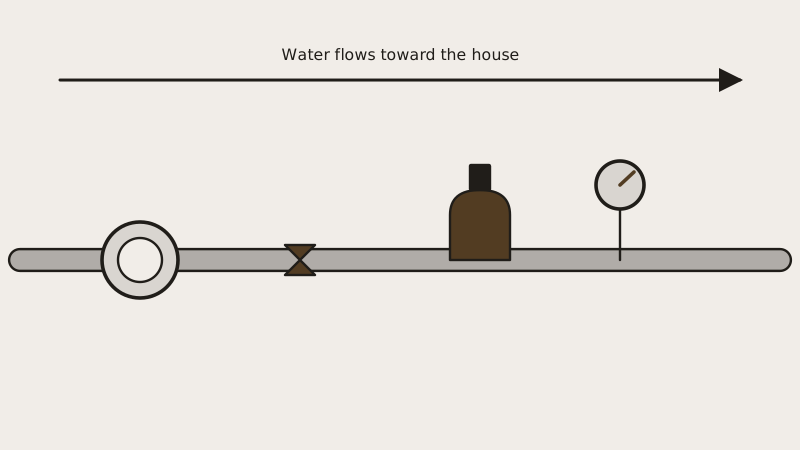
You adjust a house pressure regulator by loosening the locknut on top of the bell-shaped valve, giving the adjusting screw small quarter-turn nudges, and reading a pressure gauge on an outdoor spigot after each turn. Clockwise raises the pressure, counterclockwise lowers it. Aim for roughly 50 to 60 psi. This page belongs to the larger guide on water pressure reducers and regulators, and it covers the whole job, from finding the valve to knowing when it has died.
Where is the pressure regulator for house water?
Follow the supply pipe from the point of entry and you will meet it right after the main shutoff. Look for a brass bell-shaped body about the size of a grapefruit, with a bolt and locknut on top. In Pasadena homes it is often in the front near the meter box, in the garage, in a utility closet, or under the house in the crawlspace.
Plenty of older houses have no regulator, especially where street pressure runs modest. Pasadena has foothills and the Arroyo, and height changes pressure: homes up the slope usually read lower than homes below, so neighboring blocks can differ. The separate article on where a pressure regulator is located shows more mounting spots, and the page about a whole-house regulator explains what the valve protects.
How does a water pressure regulator work?
Inside the bell is a spring-loaded diaphragm and a valve seat. High pressure from the street pushes the diaphragm against the spring, which narrows the opening until the pressure downstream matches the setting. Turning the adjusting screw changes the spring load, and with it the target pressure.
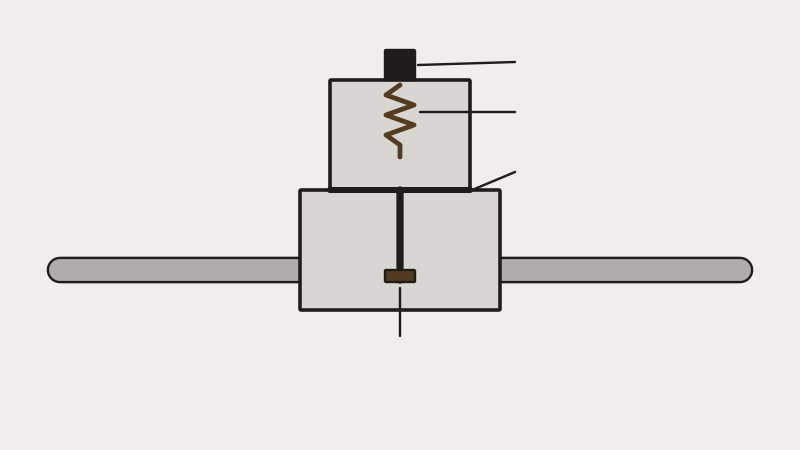
The valve only reduces pressure while water is flowing or while pressure leaks off the house side, which matters when you test. Many are factory set near 50 psi. Under the California Plumbing Code, anything over 80 psi of static pressure calls for a regulator fitted behind a strainer, and the 2025 edition adds an expansion tank downstream. Read about that in water heater expansion tank replacement.
Is adjusting the regulator a do-it-yourself job?
Yes, if the valve is within reach and a gauge is in hand. A hose-bib test gauge is cheap at any hardware store; thread it onto an outside faucet, turn the faucet on, and note the number while nothing else in the house is using water. Under 40 psi feels weak, and over 80 psi puts strain on pipes, valves and appliances. The target for most homes is the 50 to 60 range.
The sequence: stop all water use, record the starting reading, back off the locknut, and rotate the screw one quarter turn in the direction you need. Run any faucet briefly, shut it, and check the needle once more, since the valve can keep the old pressure trapped until water moves. Keep going in small steps, then snug the locknut. Never wind the screw to its stop. A needle that will not budge, or one that climbs overnight, points to a dead valve that needs replacing.
Why does the water pressure stay high or low after an adjustment?
A reading that refuses to settle usually means a worn seat or diaphragm, a clogged strainer screen, or heat. A water heater warming its tank with no expansion tank pushes pressure past the setting on every cycle. Weak flow after an adjustment can trace back to a half-closed shutoff, rusted galvanized pipe or a drop on the city side.
Work through the list in order. Confirm the main shutoff is fully open. Retest at the hose bib late in the evening, because neighborhood demand shifts the reading. If pressure is fine outside but weak at one fixture, the problem is local. Our guides on low water pressure at home and on hot water pressure cover those cases. Banging pipes after a change can come from the setting too; see water hammer.
When does a pressure regulator wear out?
Ten to fifteen years is a common rule of thumb for these valves, with some lasting longer, though the true figure swings with the model and the water. Hard, scaling water, which is common in the San Gabriel Valley, can clog the strainer and wear the seat. Failure usually shows as creeping pressure, noise or a sudden jump.
Test the pressure once a year with the gauge. A gauge that reads 80 or more at a quiet hour means the regulator is failing, or it was never set correctly. Replace the valve before the high pressure damages a water heater or a toilet fill valve. Pricing is covered in pressure regulator installation cost.
Can I replace the regulator myself?
You can swap an accessible valve of the same size, but plumbing work on the main line calls for a plumber in most cases. The job involves shutting the water at the meter, cutting or unthreading pipe, soldering or using fittings, and sizing the replacement. A mistake floods the house or leaves the pressure unchecked.
If the valve is a common model such as a Watts bell regulator, a replacement fits in the same space once the union ends are matched. Many homes use a threaded union for easy swaps. If yours is soldered in, expect pipe cutting. Plumbing beyond the small-job limit falls under California's contractor licensing law, and the main line may need a permit. If in doubt, ask for a price on the quote page.
What about regulators for pumps, showers and hoses?
These are different devices that share the name. A well or booster pump has a pressure switch and a tank, not a house regulator, and it is set for cut-in and cut-off pressure. A showerhead flow restrictor limits gallons per minute rather than pressure. A hose-end regulator protects a hose or a sprinkler, and the inline kind guards one line.
Most homes on city water in Pasadena and nearby cities need only the one whole-house valve, and any pump or booster belongs to a special setup you would know about. If a showerhead feels weak while the gauge reads fine, the culprit is often a clogged screen or a flow limiter in the fixture. For anything touching a pump, ask a plumber.
Common questions
How much time should I set aside?
A tune-up with a gauge takes about 20 minutes. Swapping the valve usually fills a couple of hours when it is easy to reach and the shutoff holds. Cut pipe, a stubborn main shutoff, a permit or a new expansion tank all add time.
What do I ask before someone replaces the regulator?
Write down the contractor license number and look it up on the state's site. Find out the brand and model, the pressure setting, and if a strainer and an expansion tank are in the price. Keep the list on paper and ask about a permit.
Should someone be at home while the valve is swapped?
Yes. The main stays shut during the job, and it helps to watch the gauge, see the final setting and ask any questions before the plumber leaves. For a valve in a locked garage or under the house, arrange access beforehand and say so when booking.
What is the safe pressure for a house?
Most household plumbing is built for 40 to 80 psi, and 50 to 60 suits comfort and appliance life best. Static pressure above 80 psi triggers the code requirement for a regulator, so a reading past that needs action soon, not eventually.
For the wider picture, start with Pasadena Pipe Works.
Sources
Page updated