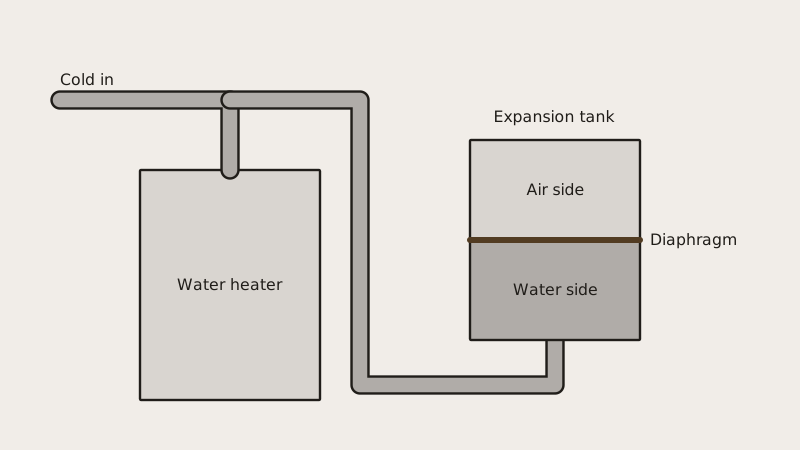
Replace a water heater expansion tank when it has lost its air cushion, which you can usually tell by a dripping relief valve, spikes in house pressure or a tank that feels full of water when tapped. The part is small and inexpensive next to the heater, but the work involves shutting off water, draining the line and setting the air charge, so a lot of owners leave it to a plumber. It belongs with the rest of our water heater replacement guidance, and the sections below explain what it does, how to test it and what a swap involves.
What does an expansion tank do on a water heater?
Heated water takes up more room. Where a regulator or check valve closes the system at the meter, the extra volume has nowhere to escape. The expansion tank holds it, using an air cushion behind a rubber diaphragm, so pressure stays near normal instead of surging with each heating cycle.
Without it, every cycle pushes the pressure up until the temperature and pressure relief valve opens or a fixture takes the strain. That is why the California Plumbing Code, in its 2025 edition, calls for an approved expansion tank on the cold-water side after a pressure regulator. A house with a regulator or a check valve behaves as a closed system whether or not anyone noticed. If yours has one and no tank, the heater and the pipes absorb every surge. See how to adjust a water pressure regulator valve for the pressure side of the story.
How do I know the expansion tank has failed?
The common signs are a relief valve that drips or weeps after heating, water hammer or banging when the heater fires, faucets and toilets that wear out early, and a tank that sounds dull and heavy when tapped. A failed diaphragm lets water fill the air side.
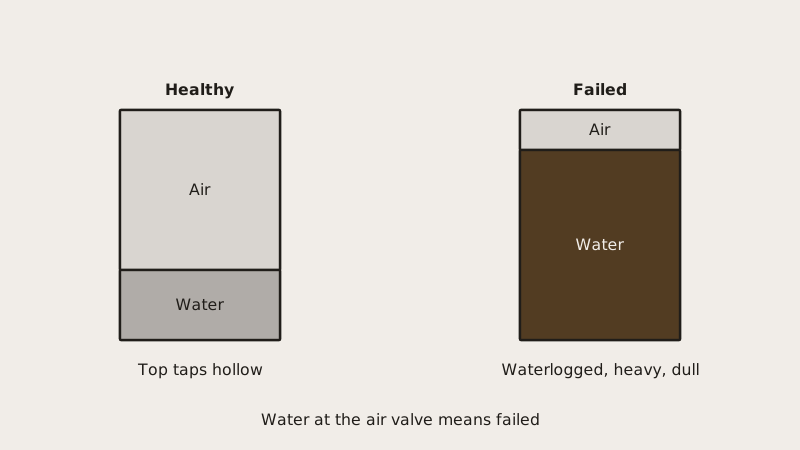
Test it safely: shut off the water supply to the heater, open a hot tap until the flow stops so the tank is empty, then remove the plastic cap on the tank's air valve and press the stem with a gauge. Manufacturers say the reading should match the house's cold water pressure, and if it is low or water squirts out, replace the tank. Never check the charge while the tank is full of water. Do not adjust a tank that is corroded or damaged; replace it. Banging pipes can have other causes too, covered in water hammer in the house.
How long does an expansion tank last?
Makers publish short warranties, one to three years on common residential models, but tanks often run longer than that. Do not read the warranty as the life. Expect to check yours as part of annual water heater care, and replace it when it fails the test or when you replace the heater.
Hot-water-heavy households, high pressure and hard water all wear a tank sooner. Pasadena Water and Power reported hardness of 202 to 256 ppm in 2025, and scale from hard water can cause trouble elsewhere in the system. Amtrol recommends that a professional inspect the system, including the expansion tank, each year, and the relief valve at least every three years. When a heater is replaced, a new expansion tank is cheap insurance, and many plumbers fit one as a matter of course; water heater relief valve replacement covers the valve beside it.
What is involved in replacing the tank?
The plumber shuts off the cold supply, drains the line, unthreads the old tank from its tee on the cold pipe above the heater, sets the air precharge on the new one to match house pressure, threads it on with sealant, supports it, turns the water on and purges air at a hot tap. Then checks for leaks.
Precharge matters: set it with the tank empty to match the incoming cold pressure, which Watts says must be adjusted under zero system pressure. Tanks mount best with the connection up; a tank mounted sideways or hanging needs solid support, because a full tank is heavy. A plumber also checks the relief valve, its drain line and whether strapping is in place. If the heater is old, a new tank on a failing heater is wasted, so compare with what a water heater replacement costs.
Is this a do-it-yourself replacement?
A handy owner can, but there are risks: scalds from hot lines, a flooded garage from an unclosed valve, a wrongly set precharge, and a poorly supported tank that stresses the pipe. If the heater is gas, keep clear of the gas line and flue. Any work that changes a water heater system may need a permit.
If you do it, wear gloves, turn off the heater power or gas first, relieve pressure, and use thread sealant rated for potable water. Check the maker's instructions for your model. When the heater is in an attic or tight closet, hire the job out. A leak that starts at the tank connection is quickly a bigger problem; see leaking water heater repair. For a local plumber, start on the quote page and attach a photo of the heater area.
Common questions
How long does the swap itself take?
Usually an hour or two for the plumber, counting the drain-down and the leak test. A heater wedged into a tight spot, corroded fittings or a missing support bracket can stretch that. Expect the water to be off for part of the visit.
What do I confirm with a plumber before the work?
Obtain the contractor license number and look it up with the state license board. Ask which tank size and brand goes in, whether the price covers setting the precharge and testing the relief valve, whether a permit applies, and what happens if the old fittings crumble when they are loosened.
Must someone be at the house while the tank is swapped?
Yes. An adult needs to let the plumber reach the heater, agree to the water shutoff and sign off on any extra work, such as a new relief valve or a bracket. Shift boxes and tools away from the heater before anyone arrives.
Is an expansion tank required in California?
The California Plumbing Code requires pressure control when static pressure goes above 80 psi, and its 2025 edition calls for an approved expansion tank downstream of the regulator. A plumber or the city building department can confirm how it applies to your home.
For the wider picture, start with plumber across Pasadena.
Sources
- 2026 Annual Drinking Water Quality Report (2025 data), Pasadena Water and Power
- Thermal expansion tank installation and operation instructions, Amtrol
- Model PLT-35 potable hot water expansion tank installation instructions, Watts
- 608.2 Excessive Water Pressure, California Plumbing Code (2025)
- Check a contractor license, California Contractors State License Board
Page updated