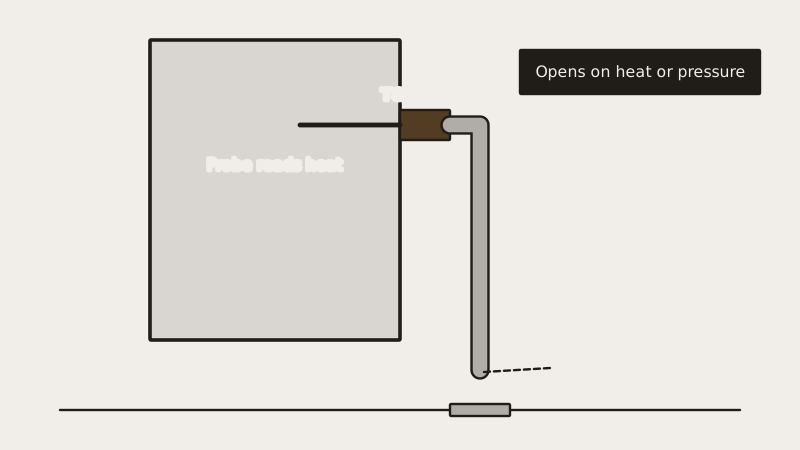
Replace a relief valve that drips, weeps or stays shut when you test it, and then work out why it opened in the first place. The valve is a small brass fitting on the tank with a lever on it, and its only purpose is to let water out before the tank can hold too much heat or pressure. The bigger repair-or-replace picture lives on the water heater replacement page, and the quote form gets a plumber visit started.
What danger does this valve guard against?
It protects against a tank that gets too hot or too pressurized. If a thermostat sticks, or heated water has no room to expand, the valve opens and sends water down its discharge pipe. Typical residential valves open at 150 psi or 210 degrees Fahrenheit, and the rating can never be higher than the tank's own working pressure.
The rules around it are firm because it is a safety part. The outlet must point down. The drain pipe must be as wide as the outlet and finish a few inches off the floor or at a proper drain. No shut-off valve may sit between the valve and the tank, and no cap or plug may go on the outlet. A valve capped, threaded or fitted with a reducer is a hazard, whatever the reason it was done.
What makes a relief valve drip?
Four things: heated water with nowhere to expand, supply pressure that runs too high, a worn or crusty seat, and water that really is too hot. The first two are most common, and neither is the valve's fault. When pressure or heat is the cause, the valve is doing its job, and a replacement will begin dripping again.
Plenty of homes have a check valve or regulator where the line enters, and that makes the plumbing a sealed loop. Every heating cycle then pushes pressure up, since swelling water has no path back toward the street. A small expansion tank teed into the cold pipe soaks it up. High street pressure, from roughly 70 to 80 psi upward, produces the same drip, and two other pages cover those fixes: pressure regulator installation cost and replacing an expansion tank. Scale also coats seats and keeps them from closing. The city utility's 2025 report puts hardness at 202 to 256 ppm, which is why old valves around here often fail from crust.
How can I test the valve without getting hurt?
Park a bucket where the discharge pipe ends. Raise the lever for three or four seconds, then release it. A healthy valve gushes and then shuts off cleanly. If nothing emerges, or it trickles on afterward, the valve is stuck or worn. Keep skin well away from the outflow, because it may be hot enough to scald.
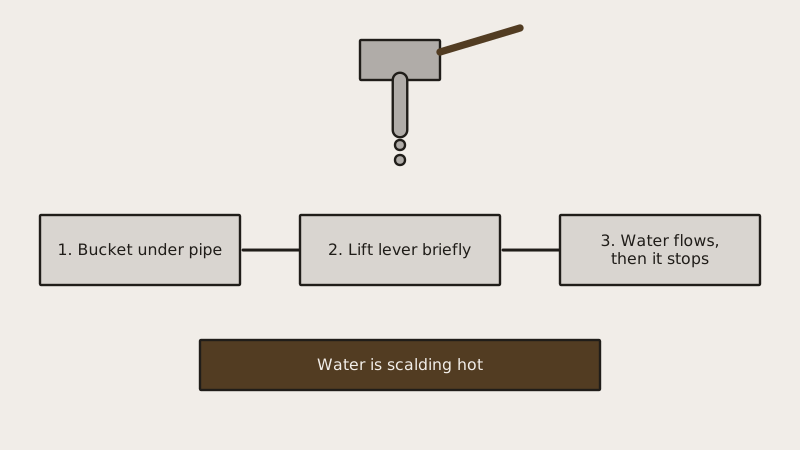
One caution: a valve that has gone years without being touched can start dripping the moment you work it, since the lever dislodges grit from the seat. That is useful news, but be ready to replace it. Many manufacturers suggest an annual test. If the lever is frozen or the discharge pipe is missing, leave it alone and book a plumber.
Is swapping the valve a DIY job?
A careful owner can do it, though several steps carry risk. Kill the power or gas, turn the cold inlet off, bleed enough water from the tank to drop below the valve, then remove the old discharge pipe. The new valve must match the heater's pressure and BTU rating, and the pipe goes back on without a cap, reducer or trap.
The danger is scalding water and a tank under pressure, and with a gas heater, the work happens near a burner and a flue. A whiff of gas changes everything: step outside first, then use the SoCalGas emergency line, 1-800-427-2200, and 911 if anyone could be hurt. A valve rusted into the tank, or a fitting in bad shape, is plumber territory, because a snapped fitting can end the tank. California sets its contractor license threshold at $1,000 of labor plus materials, rarely reached by a valve swap. On permits, the Pasadena Permit Center names water heater replacement among jobs that may not need plans. Whether a valve-only change needs a permit is a question for the plumber or the Permit Center.
What should I expect to pay for a new valve?
Published figures put the valve at $10 to $60 and a plumber's complete visit at $150 to $300, with outliers as low as $100 and as high as $350. Take them as a guide and wait for the written quote. The bill climbs if the plumber discovers the real culprit is a missing expansion tank or a failed regulator.
| Item | Published range |
|---|---|
| The valve by itself | $10 up to $60 |
| Plumber swaps the valve | $150 up to $300 |
| Expansion tank, installed | $200 up to $400 |
| Pressure-reducing valve, installed | $300 up to $600 |
Extras are where owners overspend. If expansion or pressure caused the drip and the plumber only changes the valve, the drip returns and you pay twice. Request a pressure reading with a gauge and a look for an expansion tank before anyone touches the valve. If the heater itself is on its last legs, how often water heaters are replaced helps you decide whether to repair at all.
Common questions
Why can't I just plug a leaking valve?
Because the valve is the one part standing between a stuck thermostat and a ruptured tank. A plug turns a nuisance into a danger and breaks plumbing code. Instead, replace a worn valve, and correct the pressure or expansion issue that made it open.
How long does a relief valve last?
No fixed lifespan exists. Change it when it leaks, sticks or fails a lever test, or when the heater itself goes, because a new heater arrives with a new valve. Yearly lever tests catch trouble early, and some manufacturers also suggest a professional inspection every few years.
Is a leaking valve an emergency?
Hot water pouring out is. Cut the heater's energy supply, close the cold inlet and phone for help. A slow drip can sit for a day or two, though not for weeks. A leak from the tank's body belongs to another problem, explained in repairing water heater leakage.
Where should the drain pipe end?
Open-ended, a few inches over the floor or above a drain, so any discharge shows and lands somewhere safe. Do not thread it, shrink it or run it uphill. If yours is missing entirely, fit one before the next heating cycle, since the valve would otherwise spray scalding water at whoever stands close.
My new valve still drips. Now what?
Then the valve was never the problem. Have a plumber read household pressure, which should stay under 80 psi, and look for an expansion tank. Another replacement will not solve either issue, and the water heater leak plumber page covers other sources of dampness.
Browse other services on the Pasadena Pipe Works home page.
Sources
- InspectApedia, Temperature and pressure relief valves on water heaters (ratings, causes, discharge rules)
- Pasadena Water and Power, 2026 annual drinking water quality report
- City of Pasadena Permit Center, apply for a permit
- California Contractors State License Board, handyperson exemption
- Published relief valve replacement prices from national and Southern California cost guides, checked November 2026
Page updated