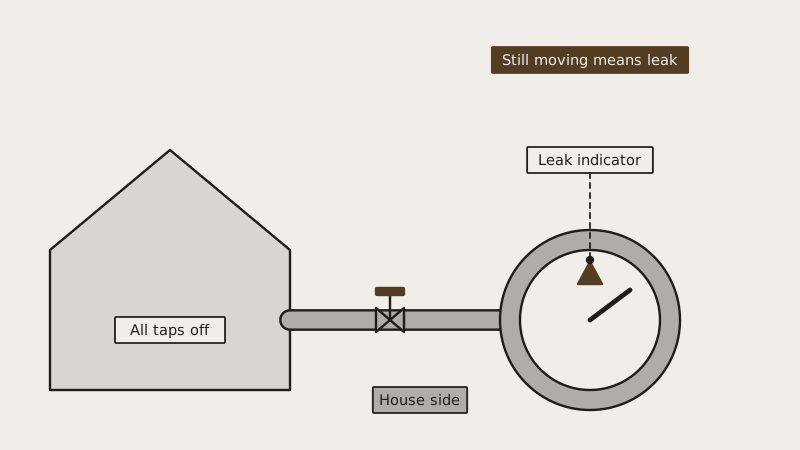
When the bill leaps, the suspects are usually a toilet quietly refilling itself, a pipe weeping out of sight, a sprinkler schedule that changed, or a statement covering extra days. Dismiss the dull explanations first, then run the meter test to learn whether water moves while every fixture is idle. That test settles most cases in about two hours.
Pasadena Pipe Works arranges a local plumber if the test shows water escaping. The checks below cost nothing, and our home page covers the other jobs we arrange.
How can I find out fast whether something is leaking?
Write down the meter reading, make sure nothing is drawing water, return two hours later and compare. A changed number means water went somewhere. The U.S. Environmental Protection Agency recommends this same check. A still meter points to habits, irrigation or a longer billing period instead of a hidden leak.
Be strict about it: no dishwasher, no laundry, no ice maker refill, no sprinkler timer. Residential meters usually sit in a ground-level box near the curb. Open the lid and find the small leak indicator, a dial or triangle that turns on even a trickle. Spinning with every tap closed is your answer.
Next, close the house shutoff and recheck. A meter that halts puts the leak among your interior pipes. A meter still turning puts it underground between the meter and that valve, which turns the problem into a burst pipe or buried line repair question.
Could a toilet be the cause?
Very often. A tired flapper lets tank water creep into the bowl around the clock while the fill valve keeps replacing it. For EPA's dye test, tint the tank water with food coloring and leave the toilet alone for ten minutes. If the bowl turns the same shade, the flapper is leaking. Flush afterward so the tank isn't stained.
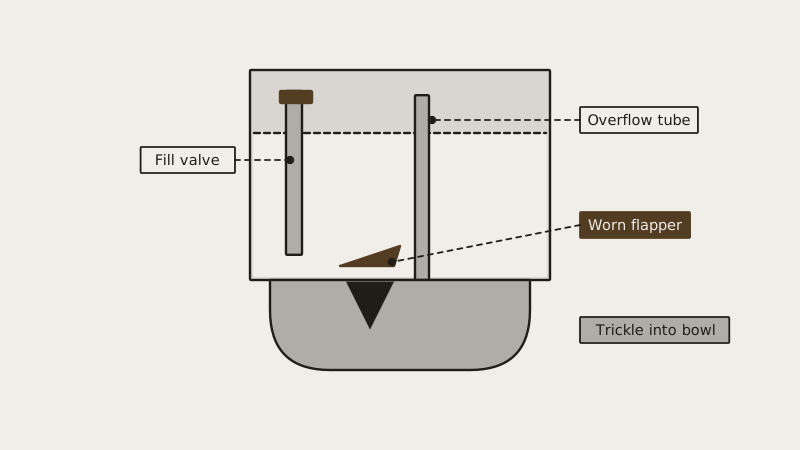
Toilet leaks make no noise, so they can run for weeks. The usual cure is an inexpensive flapper or fill valve, and our walkthrough on stopping a running toilet covers the steps. Test every toilet, even the guest bath nobody uses.
How much water does a small leak waste?
More than most people guess. EPA figures credit the average household with over 9,300 gallons lost yearly, and about nine percent of homes lose 50 gallons or more a day. A faucet that drips every second still totals more than 3,000 gallons across twelve months. Your bill counts in units of 100 cubic feet, about 748 gallons each.
Put that against Pasadena's rates. The utility's single-family residential water charge is tiered: the published rates are about $2.74 per unit up to 7 units, about $7.24 from 7 to 29, and about $7.87 above 29. A leak that pushes you out of the first tier means the extra water gets billed at more than two and a half times the cheapest rate. That is why a modest leak can double a bill.
A single dripping tap is a smaller matter. If you are wondering whether a drip alone could do it, read whether a leaky faucet raises your bill.
Why did just this month's bill spike, or why is it high in winter?
Check the dates first. A longer billing period, an estimated read, or a catch-up after one gives a larger number with no change in habits. Bimonthly bills, which are billed twice the fixed charge, can also look dramatic next to a monthly neighbor. In summer, sprinklers and a pool top-off push use up. Winter spikes point toward leaks, guests or a stuck valve.
EPA offers a benchmark for cold months: a family of four above 12,000 gallons in a month of cold weather may be leaking badly. Pasadena winters are mild by national standards, and irrigation isn't off, so a controller left on a summer schedule can quietly keep running in December. Rain delay features help, but check the timer.
Other seasonal culprits include a pool auto-fill that sticks, an evaporative cooler that overflows its pan, and a heating or cooling system that leaks. Heating and air conditioning equipment with a water line, such as a boiler, a humidifier or a water-cooled unit, can leak into a pan or a wall, so an HVAC contractor may be the right call there.
What else can run up the water bill without a leak?
Irrigation tops the list in the valley's hot, dry stretches, followed by a new pool or spa, a new toilet that isn't efficient, guests, and a dishwasher or washing machine in heavy use. A hose left connected to a spigot, or a connect-and-forget drip line, can run unnoticed for days.
Walk the property with this list:
- Irrigation: check the controller schedule, zone run times and any broken heads. Lawn zones should dry out between cycles.
- Hose bibs: a hose or sprinkler attached to an outdoor spigot may be leaking at the connection.
- Kitchen: a dishwasher supply line, an ice maker line or a dripping disposal connection under the sink can leak into a cabinet and evaporate before you notice. Look inside the cabinets for stains, swelling or musty smells.
- Water heater: a relief valve that weeps, or a leaking tank, shows up as a puddle or rust at the base.
- Water softener: a unit that doesn't stop regenerating wastes water at the drain.
- Pressure: strong street pressure drives extra water out of every open fixture and ages fittings faster. A regulator can tame it; see water pressure regulators.
Does water hammer have anything to do with it?
Not directly. The thump when a valve snaps shut, called water hammer, adds nothing to the meter. It does signal pressure or loose piping that can wear fittings until they weep, so a plumber may propose a regulator or arrestors. The causes get their own article, the water hammer sound.
Banging that arrives alongside a bigger bill is worth a look at pressure. Pasadena Water and Power asks customers to report a permanent pressure change to its water emergency line, 626-744-4138, and its customer service number is 626-744-4005.
Can the city help with a high bill caused by a leak?
Pasadena Water and Power runs a Water Leak Assistance Program. It can credit up to half of the excess water charge, capped at $3,000, for a leak you couldn't reasonably have found, but you must repair the leak first and show proof of repair. You also apply within 30 days of discovering and fixing it, and the program has limits.
Per the utility's page, use must have been at least twice the usual for a comparable period, you make a good-faith payment equal to last year's bill for that period, and you can't have received assistance in the last 36 months. It doesn't pay for the repair. Because proof of repair is required, keep the plumber's invoice and ask for a written description of the leak. Eligibility changes, so read the current page and call the customer service line.
When does this become a job for a plumber?
Make the call once the meter creeps with all fixtures off, a wall, ceiling or cabinet turns damp, or a toilet or tap won't quit. The plumber can test line pressure and, when needed, bring acoustic gear to pinpoint a buried leak. Some plumbers specialize in leak detection, worth asking about for slab or wall leaks.
Hidden leaks in older Pasadena houses often trace to galvanized or old copper pipe, corroded fittings and the original water heater. For wet drywall, see signs a pipe has burst. Health matters here too: lingering damp invites mold, and the EPA says materials dried inside two days mostly stay clear of it.
To book a visit with the price on paper, start at the quote page. A small leak fixed early costs less than months of wasted water plus the damage.
Common questions
Where and how do I read the meter?
Open the box lid, clear away dirt, and read the numbered dial, which counts in hundreds of cubic feet. Check the leak indicator as well. Jot down the figure, leave every tap closed for two hours, then compare. A different number or a turning indicator signals a leak. If the lid sticks or the box sits in the roadway, ask the utility instead of forcing it.
Why would the bill soar if I'm not using water?
Something is using it on your behalf: a toilet, a dripping tap, an irrigation zone, a leaking water heater or a buried service line. Run the two-hour meter test with everything off. If the meter moves, close the house valve and test again to separate indoor leaks from underground ones.
Is a high bill my fault if the leak was hidden?
Generally, a utility bills for water that passes through the meter, leak or not. That is why the leak assistance program exists: it can credit part of the excess if you repair the leak and apply on time. Eligibility rules apply, and a leak you could reasonably have noticed may not qualify. Ask the utility.
Can a gas water heater push up the water bill?
Mostly the gas bill is affected, though a leaking tank, relief valve or supply connection adds to the water bill as well. Watch for rust at the base, a damp floor, or a dripping relief valve. Heater leaks are plumber work, and gas piping stays with a state-credentialed contractor.
Does a high bill mean I should replace my pipes?
Not by itself. One leak, in one place, is a repair. Several leaks in different spots, or repeated pinholes in old copper or galvanized pipe, are a different story, and then repiping becomes a fair question. A plumber can test pressure and show you the pipe before you decide. Our page on why homeowners repipe covers the signs.
Sources
Page updated