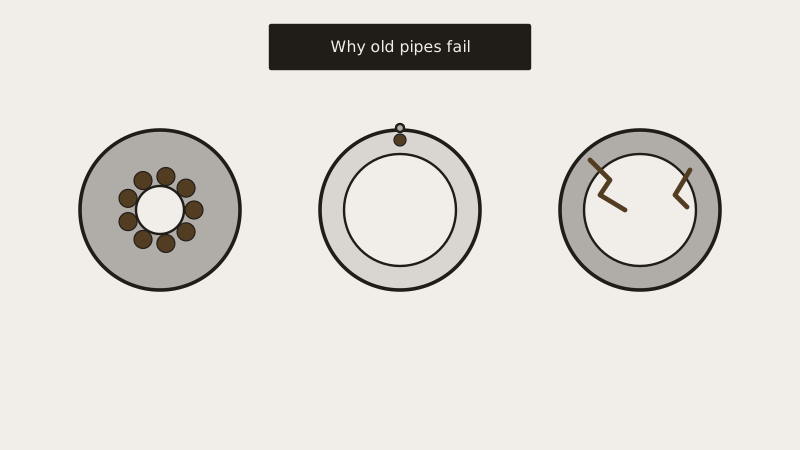
Pipes get replaced throughout a house once failures outrun repairs. The usual culprits: polybutylene plastic, corroded galvanized steel, copper full of pinholes, or leaks popping up in one room after another. A repipe costs thousands of dollars, but a single burst in a wall can cost as much in water damage and mold. Our page on polybutylene and pipe replacement covers the plastic that is most often the reason, and the sections below cover the other signs and what the work involves.
Why was polybutylene pipe banned?
Polybutylene is a gray plastic that was installed in millions of homes across the continent beginning in the late 1970s and fading out toward the end of the 1990s. It leaked and burst, drew a class-action suit (Cox v. Shell Oil), and U.S. building codes no longer accept it. Chlorine in municipal water slowly breaks down both the pipe and the fittings from within.
That mechanism explains why it is so hard to judge: a pipe can look flawless outside while it flakes within, and it may fail after a few years or after several decades. Trouble usually starts where the pipe bends, kinks or meets a fitting. Replacement of the whole system is the lasting answer. Houses of the right age in Southern California may still carry some, often up in the attic, below the floor or near the water heater. Unsure which plastic you have? The colors and markings are described in our guide to leaking plastic pipe.
Why would an older Pasadena house need repiping?
Because the original pipe is worn out. Craftsman bungalows and other pre-1960s houses often have galvanized steel rusting inward, copper pitting in hard water, or a patchwork of earlier fixes in mixed materials. Once leaks show up in several places, patching stops paying off.
Water chemistry matters too. Pasadena Water and Power reported average hardness around 222 parts per million in its latest report, in the very hard range, and scale narrows galvanized pipe while aggressive water can pit thin copper. Homes built before 1986 can also have lead solder on copper joints, and the EPA lists solder and older fixtures as lead sources; its guidance is to test your water and ask your utility. Pasadena's utility reports its service lines are not lead, but a house's internal plumbing is a separate question. Water hardness by ZIP code shows how local supply varies, and hard water and scale covers what it does to pipes and appliances.
How can I tell my supply pipes are failing?
Repeated leaks in separate spots, pinhole spray from copper, rust-colored water at the first draw of the morning, low pressure that a new regulator does not fix, and green or white crust on joints all point to pipe on its way out. Any one of them justifies having a plumber look over the full system.
Other signs: a wet spot on a ceiling with no roof leak, a sudden rise in the water bill, a hissing sound in the walls, or water that is slow to run hot. A plumber can check pressure, look at the pipe material where it is exposed in the garage, crawlspace or attic, and sometimes run a camera or pressure test. Related reading: low water pressure causes, leaking copper pipe repairs and attic and crawlspace plumbing.
What does a repipe cost, and what risk does it avoid?
Guides published in 2026 give a spread for an average two-bathroom house of about 2,000 square feet, shown below. Drywall patching, permits and slab foundations add to it. What you buy is protection from an uncontrolled leak, with its water damage, mold and insurance argument.
| Pipe | Published range |
|---|---|
| PEX (flexible plastic) | about $4,000 up to $10,000 |
| Copper (rigid metal) | about $8,000 up to $18,000 |
| All materials combined | $4,000 to $15,000 |
The table draws on contractor and cost-guide websites. Treat it as rough, since your house gets its own quote. Bathrooms, a slab foundation, finished walls that are hard to open, and the pipe you pick all push the figure up. One guide estimates drywall repair at $1,000 to $3,000, often billed separately. Our cost to repipe a home page has the breakdown. A burst pipe in the wrong place can cost more than that in damage, which is the real argument for repiping early rather than after a flood. Mold risk grows when slow leaks go unseen inside walls for months. Have the quote say how many fixtures are covered, which pipe goes in, and who patches the drywall. Resale value is harder to pin down, though a documented new supply system is something buyers and inspectors like to see.
Is copper or PEX better for a repipe?
Either can carry drinking water under California's plumbing code, and either gets installed. PEX is flexible, quicker to run through walls, cheaper, and immune to pinhole corrosion. Copper is rigid, fire-resistant and long-lived but costs more. Water chemistry, budget and the layout of the house settle it.
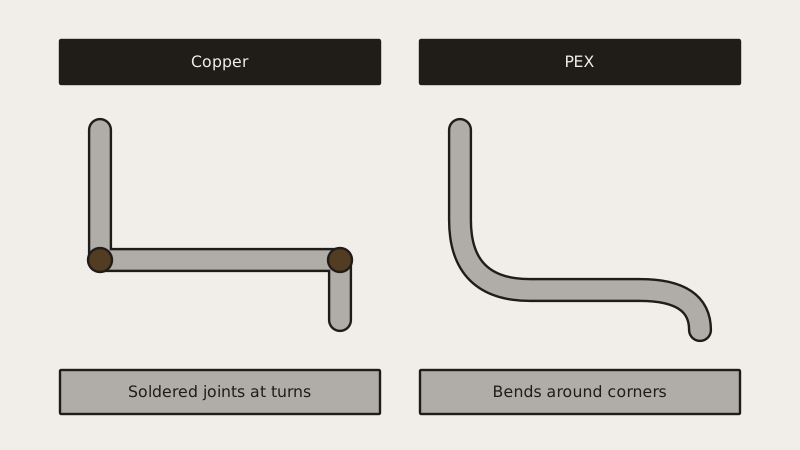
California added PEX to its plumbing code in 2009. Copper offers the longer track record and some scrap value; PEX costs around half as much in several guides and needs fewer holes in the walls. Some owners choose copper for exposed runs and PEX inside walls. Our PEX piping versus copper page compares them in more depth, and the article on what repiping with PEX costs adds numbers.
What is life like during a repipe, and for how many days?
The crew closes the water, cuts small access holes in walls and ceilings, runs new lines to every fixture, ties them in at the meter and the water heater, pressure-tests the system and turns the water back on. Guides put most PEX jobs at one to four days of plumbing, with more days after that for drywall and paint.
During the work the house has no water for much of each day, so plan for showers and cooking elsewhere. Furniture and wall hangings near work areas may need to move. A permit is normally needed because replacing supply piping is permitted work. In Pasadena the Permit Center issues it, while the surrounding cities each have a building department of their own. After the work, the city inspects the new piping before walls close. Houses with lines under a concrete slab are a different case and often mean rerouting through walls and ceilings; slab leak: repair or repipe lays out that choice.
When is a repair enough?
When the leak is one failure in pipe that is otherwise sound. A single pinhole in a 15-year-old copper run, or one failed fitting, calls for a repair. Repiping makes better financial sense when leaks keep returning in different rooms, when the material is polybutylene or badly corroded galvanized, or when pressure is weak throughout.
Count the repair bills from the last two years. Three plumber visits for leaks already suggests the fourth is coming. If you cannot judge the pipe yourself, a plumber can examine what runs through the garage or crawlspace and give you a written opinion.
Common questions
Will a new supply system raise my sale price?
It can help, since buyers and inspectors flag polybutylene and failing galvanized pipe, and insurers may ask about them. It seldom adds its full cost to the price, but one less item to haggle over. Keep the permit, the invoice and the pipe specification to show a buyer.
Can the work be split up by room?
In many homes, yes. A plumber can replace one branch, such as a bathroom group or the kitchen line, and tie it to existing pipe, though mixing metals needs the right fittings. A partial job costs less today and does not stop failures elsewhere, so request the scope in writing, plus a price for the remainder.
Will my insurer pay for new pipe?
Rarely for the pipe itself, since insurers treat aging pipe as upkeep. Damage from a sudden burst may be covered, whereas slow leaks are often excluded. Read the policy, then ask your insurer directly before committing to anything. A written answer is best, so you can keep it with the repipe paperwork.
How do I recognize polybutylene?
Look at pipes near the water heater, in the garage or under sinks. Polybutylene is a flexible, usually gray plastic pipe, sometimes blue, with markings such as PB2110 and with crimped metal or plastic fittings. If you find it, ask a plumber about replacement rather than waiting for a leak.
To ask about a repipe, use the quote form. Our service towns are on the where we work page, and the home page lists other plumbing services.
Sources
- Wikipedia, Polybutylene (history, chlorine degradation, Cox v. Shell Oil)
- U.S. EPA, basic information about lead in drinking water
- Pasadena Water and Power, 2026 Annual Drinking Water Quality Report
- Published whole-house repipe cost guides, checked November 2026
Page updated