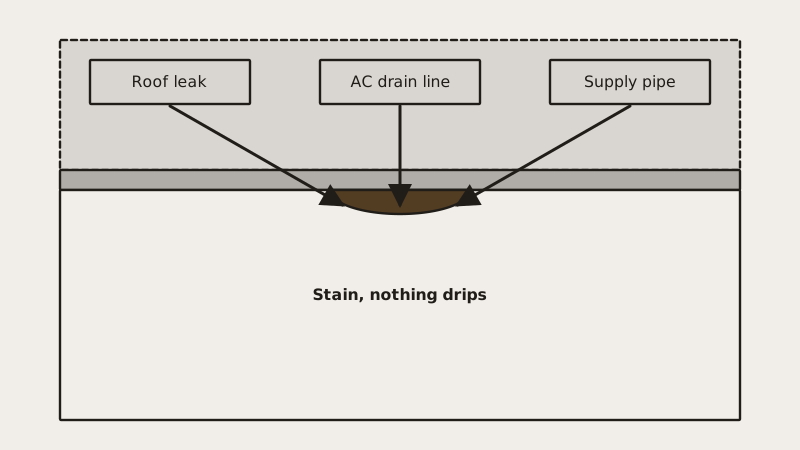
Brown rings or damp patches on a ceiling with no drip mean moisture is reaching the drywall from above, even if you cannot see it. The usual sources are a small plumbing leak that only runs when a fixture is used, an air conditioner drain pan or line, condensation on cold pipes or ducts, or rain finding a gap in the roof. Find the cause before you paint, because stains come back through fresh paint. If water is dripping or the ceiling sags, go straight to a ceiling water leak: what to do, and see the wider help on leaks and burst pipes.
Why is there a stain overhead when nothing drips?
Four things account for most cases: a slow plumbing leak, a clogged air conditioner condensate line or pan, condensation on cold surfaces in the attic, and roof leaks that only show in rain. A stain can also be old water damage that dried and never got repaired.
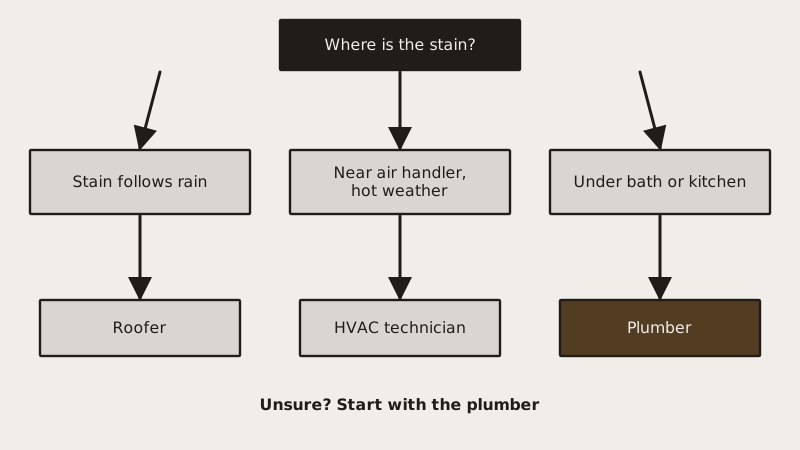
Which one is yours depends on where the stain sits. Directly under a bathroom or kitchen, think of a supply line, drain or tub seal. Under a hallway or bedroom with an air handler overhead, look at the AC. Along an exterior wall or under the roof edge, think roof or flashing. A stain that grows in rainy months points up to the roof; one that grows with every shower points to the bathroom above. Notice the shape, too: a ring with darker edges is usually water that has dried and returned several times.
Is the stain still growing, or is it old?
Touch it and press gently: a damp, soft, or cool patch is active, and a dry, firm, stained one is probably old. Trace the outline in pencil with the date beside it, then look again after rain and after a normal day of showers and dishes. If the line moves, the source is still feeding it.
A moisture meter, which hardware stores sell, gives a clearer answer than your fingers, and some plumbers use thermal cameras for the same job. Look for related signs: a musty smell, bubbling paint, a sagging patch, or a new stain. Check your water meter as well, with every fixture off; if the dial still moves, the line leaks somewhere. Compare your bills for an unexplained rise, and the broader warning signs are in how to tell if a pipe burst.
Could condensation or the air conditioner be the cause?
Yes, and in Pasadena summers it is a common one. Air conditioners remove water from humid air, and the condensate drain line or pan, often in the attic or a closet above the ceiling, can clog and overflow. Cold ducts and uninsulated pipes also sweat when hot attic air hits them.
If the stain appears in the cooling season and sits under an air handler, ask an HVAC technician to check the drain line; that is not plumbing work. Sweating pipes show up as damp insulation or drips on cold lines. The fix is insulation and ventilation, not a plumber, though a plumber can insulate supply lines. The EPA's moisture guidance says condensation signals high humidity: dry the surface, cut the moisture source, insulate cold pipes and improve air movement. Hot, damp attics can also pass moisture into drywall without any visible drip.
Could it be a slow plumbing leak?
Yes, and it is the one to rule out first. One pinhole in copper, a weeping joint, a failed toilet seal or a poorly joined drain can leak only when in use, so the stain appears and dries with your routine. Because the water travels along joists, the stain can sit far from the source.
Pasadena's older homes carry pipe that wears from the inside. Galvanized steel rusts through, copper pits, and cast iron drains corrode, so a stain beneath a bathroom deserves a real check. Clues include a drop in pressure, a hissing sound in a wall, a rising water bill, or drain backups. A plumber uses moisture meters, thermal imaging or listening gear for leak detection and opens as little drywall as possible. For a leaking supply line, close the main valve until a plumber arrives. More on how a failing line looks is in burst pipe signs.
What should I do first about the stain?
Step one: shut off the house water if a plumbing leak is likely and the stain is spreading. Move furniture out from under it, and put a bucket below any sagging patch. If the ceiling bulges with water, switch off the circuit for that room first, and only then consider a small hole at the lowest point to drain it, well clear of light fixtures and wiring. Photograph everything.
Next, dry the area. The EPA says wet materials dried within a day or two generally stay mold-free. Open windows, run fans and a dehumidifier, and keep checking for mold. Do not paint over a stain until the source is fixed and the drywall is dry, because paint hides the problem. Be careful with older textured ceilings; the EPA says asbestos materials that are not disturbed are unlikely to be a risk, and scraping or sanding them can release fibers, so have a trained professional test before you disturb a popcorn ceiling.
Which trade do I call: plumber, roofer or HVAC technician?
A plumber fits a stain under a bathroom, kitchen or laundry, a water meter that creeps with everything off, or falling pressure. Call a roofer when it follows rain. Call an HVAC technician if it sits near the air handler during hot weather. If you are unsure, start with the plumber, who can rule out the pipes.
Insurance matters too. Take dated photos and keep receipts, and read your policy on sudden and accidental water damage; insurance and burst pipe damage explains the usual rules. A burst or fast leak is urgent, and emergency burst pipe plumbing explains how that works. Our local plumber visits the house, and a request begins on the quote page. Repairing the ceiling comes after the leak is fixed; ceiling water leak repair covers that.
Common questions
Can a stain form without any water leak?
Not without moisture. A stain is a mineral and dirt deposit left by water, so water was there at some point. It may be old, from a fixed leak or past storm, or from condensation. A dry, firm stain that does not grow after rain or use is likely old.
Is a ceiling water stain dangerous?
It can be if moisture persists. Wet drywall can grow mold within one to two days, and a saturated ceiling can sag or fall. Electrical fixtures in a wet ceiling are a shock risk, so turn off the circuit. Keep children and pets clear until the area is dry.
How long does tracing the source take?
A plumber can often trace an active leak in an hour or two with a moisture meter or a thermal camera. Intermittent leaks take longer because they have to be watched while fixtures run, so expect a follow-up visit in some cases, and ask about an arrival window when booking.
What do I put to a plumber about a ceiling stain?
Search the contractor license number on the state board's site. Find out how the source will be located, whether opening the wall is in the price, who patches the drywall afterward, and what leak detection costs as a stand-alone visit. Keep the answers in the written quote.
For the wider picture, start with Pasadena Pipe Works plumber.
Sources
Page updated