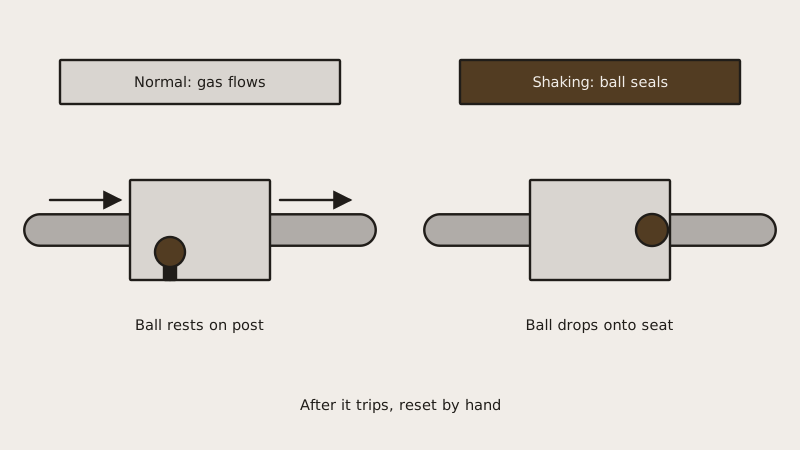
After a shake, if the valve on your gas line has dropped shut, hand the restart to a qualified professional or to SoCalGas. The utility allows owners to follow the maker's instructions but advises against it, preferring a pro who also checks each appliance for leaks. A closed valve means something downstream may be damaged. For the rest of the gas work we arrange, see the gas line hub.
The sections here explain what the device does, how a restart usually goes, who may fit one, where it mounts, how it compares with an excess flow valve, how to choose, and typical cost. Ready to book? Use the quote page to begin.
What does a quake valve do inside a gas line?
Think of a spring-loaded shutoff built into the pipe: once shaking passes a set level, it trips and cuts the gas feeding the house, no human needed. It predicts nothing. The goal is to keep gas from pouring into a ruptured pipe or a torn appliance connection, one way fires start after a quake.
People often point to Northridge, January 1994, a 6.7 magnitude quake. Wikipedia's account says broken gas lines caused numerous fires, in part as houses moved off their foundations. Approval of automatic shutoff valves in California sits with the State Architect's office, a division of the state's General Services department.
The device reacts to motion, not to a smell. A slow leak at a worn fitting will not trip it, so it adds to ordinary gas safety without replacing it.
How do I reset a seismic gas valve once it has tripped?
Procedures differ by model, so there is no single set of steps. SoCalGas says owners may follow the manufacturer's instructions, but it advises letting a qualified professional or the utility do it, along with leak-testing each appliance and relighting pilots. Never improvise on a gas line.
After a strong quake, sequence matters. A gas odor means walking out first, then dialing 1-800-427-2200, the gas company's emergency line, once you are well clear. If anyone is hurt or threatened, 911 comes first. No odor but a shut valve? Switch off the gas appliances, read the valve's label for its model and instructions, and decide whether to follow them or wait for a plumber.
Two warnings. The meter's service shutoff is the utility's: California Public Utilities Commission General Order 112-E gives SoCalGas and its contractors sole authority to work it. Also, SoCalGas cautions that a big regional event can mean many days or weeks before anyone reaches you, so a local plumber may get to the house side sooner.
If the valve closed with no earthquake behind it, SoCalGas says it charges a fee for a reset and pilot relight. Treat that as a prompt to find out why it closed before anyone rearms it.
Can I put one in myself?
No. The valve threads onto gas pipe, and that work is for someone with a California contractor license, pulling a city permit. A do-it-yourself job risks a leak, a failed inspection, and a valve mismatched to your load. SoCalGas does not fit these either.
According to SoCalGas, you can hire a qualified professional to place the valve on your house line, never on the utility's equipment. The State Architect's office says permitting, installation and inspection come from local building departments. Inside Pasadena the Building and Safety Division handles that; other San Gabriel Valley cities run separate offices.
Gas work is a regulated trade, not a weekend project. A valve mounted wrongly may stay open when it should close, or close when it should stay open.
Where on the line does the valve mount?
A home valve goes on your side of the gas meter, on piping you own, typically just beyond the meter outside the building. The utility's meter and service line are off limits. The plumber picks the spot based on the pipe, the mounting rules and the model's own listing.
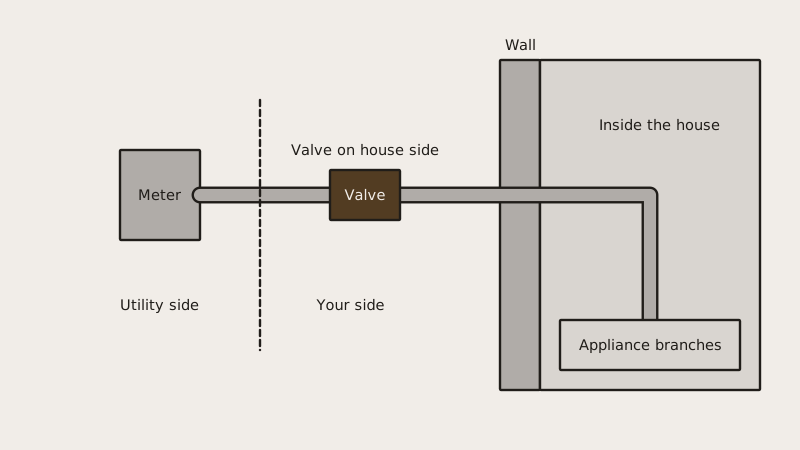
Reach matters at reset time. Outdoors is easier to get to after a quake, but each model's listing says which mounting is allowed, so the plumber reads that first.
Some older Pasadena properties have meters squeezed into side yards or behind fences, and foothill lots can put the meter far below the house. Mention such things when you request a visit, since access changes labor.
Is a quake valve the same as an excess flow valve?
No. A quake valve closes the whole supply when shaking reaches its trigger. SoCalGas describes an excess flow valve as one that closes or restricts flow when a pipe is cut or flow jumps, and says it does not shut gas off completely, so some leakage may continue. They answer different risks.
The State Architect lists both: the Excess Flow Actuated Gas Shutoff Valve and the Earthquake Sensitive Automatic Gas Shutoff Valve. That program covers residential structures only, and leaves out manual valves and appliances with a built-in shutoff.
We go further into the options on the page about an emergency gas shutoff.
What makes one valve a better pick than another?
No brand wins everywhere. The best choice is a model on the State Architect's approved list, matched to your pipe size, your gas load and the meter location. That list is public, and the plumber should choose from it, then keep the paperwork with the permit.
Steer clear of imports or units missing from that list. California's Health and Safety Code sets the approval rules for valves sold or installed for this job, so ask which listing a model falls under.
Ask about sensitivity and resetting too. Some valves rearm with a lever; others need a set procedure. One that you or a plumber can reset easily is a practical advantage after a real event.
What does a seismic valve installation cost?
Estimates posted by plumbing businesses fall in the low hundreds for a simple home install, frequently with a permit fee added. We found no current Pasadena fee schedule on an official page, so treat any number as a loose guide. Your written quote carries the actual number.
The valve model, how awkward the meter is to reach, any new fitting or short pipe run, and the permit with its inspection all push the total. A valve on a tricky hillside run costs more than one beside an open wall.
Price detail lives on our page about valve installation cost. When asking for a visit, pass along the gas line install essentials: where the meter is, pipe size if you know it, and how many gas appliances you run.
Common questions
May I restart my gas valve after a quake on my own?
SoCalGas allows owners to follow the maker's instructions but recommends that a professional or the utility do the restart and appliance check. Gas odor rules out trying: go outdoors, phone SoCalGas, and use 911 where there is danger. The meter's own valve is SoCalGas's to operate.
Does SoCalGas install quake valves?
No. SoCalGas states plainly that it will not install one. A qualified professional places it on your own house line, never on the utility's facilities. The installer needs a California contractor license, and the local building department handles the permit and inspection.
Is a quake valve mandatory in Pasadena?
We found no current Pasadena rule on an official page, so we will not state one. Valves put in California homes must be state approved, and cities set their own permit and inspection rules. Ask Pasadena's Building and Safety Division, or whichever city office covers your address.
How long does a seismic gas valve last?
Lifespan varies by model and we found no single verified figure, so check the manufacturer's documentation. Many makers suggest periodic inspection. During any gas work a plumber can look the valve over and say whether it is time to replace it.
What if the valve closes when no earthquake happened?
Treat it as a warning. Turn off gas appliances, check for gas odor, and call SoCalGas or a plumber before rearming it. A leak is one possible cause. SoCalGas notes that it may charge a fee for a reset when no earthquake caused the closure.
For the wider picture, start with Pasadena Pipe Works.
Sources
- SoCalGas, earthquake and excess flow valves
- California Division of the State Architect, gas shutoff valve certification for residential structures
- California Health and Safety Code sections 19180 to 19183 and 19200 to 19204, automatic gas shutoff valves
- Wikipedia, 1994 Northridge earthquake
Page updated