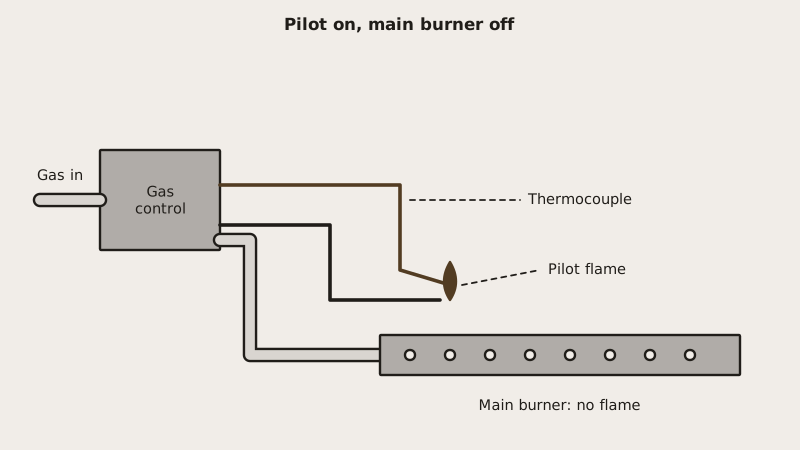
Think of the pilot as a match that stays lit. It proves gas is arriving, nothing more. The heater only heats when a small sensor in that flame tells the gas control to feed the big burner underneath, so a heater can show a healthy pilot and deliver ice water all day. A tired sensor, a sticky control, a burner clogged with lint or a thermostat turned to the wrong word on the dial are the usual reasons. If the unit is old, the better answer may sit on our water heater replacement page. To get a plumber looking at yours, use the quote form.
What stops the main burner when the pilot is burning?
Most often the thermocouple, a slim copper probe parked in the pilot flame. Heat makes it produce a trickle of electricity, enough to keep the valve from closing. When age, soot or corrosion weakens that trickle, the pilot keeps burning but the valve never opens wide for the burner, and the water stays cold.
After the thermocouple come the gas control valve itself, a burner or orifice choked with dust and rust flakes, and a thermostat whose setting or internal sensor has drifted. Repair articles on this symptom, none written by a heater maker, put the thermocouple first and the control valve second.
Some cold-water complaints never touch the burner. A snapped dip tube lets fresh cold water dump in high up inside the tank, right where the outlet draws from. A faulty anti-scald or mixing valve, or hot and cold lines swapped during old remodel work, can do the same. If just one faucet runs cold, suspect that faucet, not the heater.
Which checks can I do without touching gas parts?
Four, and they take five minutes. Read the control knob: it must sit on a temperature, not "pilot" or "vacation." Look at the pilot, which should be a steady blue flame that wraps the thermocouple tip. Run a second hot tap. Then raise the dial and listen for a click and a soft whoosh.
Here is what the listening test tells you. A click followed by no flame points toward the gas control valve or a clogged burner. No click whatsoever points toward the thermostat or its electronics. Pass that clue along when you book, because it narrows the search before anyone arrives.
Look around the heater as well. SoCalGas warns against keeping gasoline, paint, thinners or cleaners near a gas appliance, since their vapors can drift to the flame. Garage heaters that are not the flammable-vapor-resistant type must have the burner at least 18 inches above the floor.
What if there is a rotten-egg smell by the heater?
Leave the house. Gas, a roaring burner, soot on the draft hood and scorch marks around the base are all reasons to stop troubleshooting. Take everyone outside, once outside, ring SoCalGas (1-800-427-2200), and add 911 when anyone is at risk. No switches, no lighters.
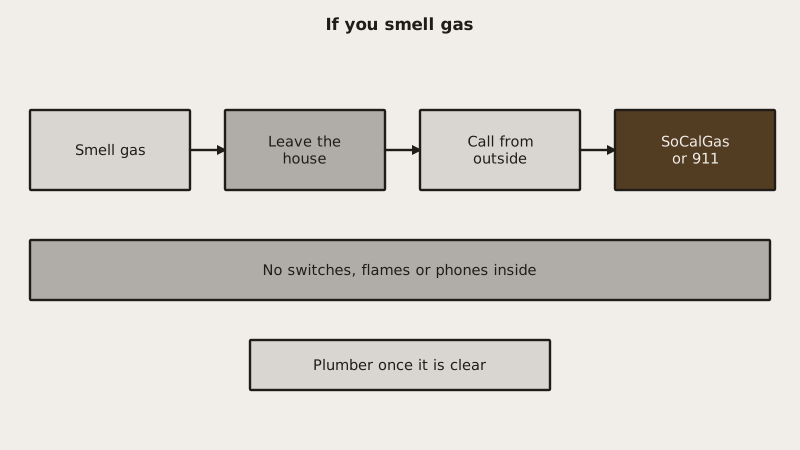
SoCalGas notes that noses fade and colds block odor, so a missing smell proves nothing. A heater that ignites with a thump, or spills exhaust into the room, needs a professional before the next use. Carbon monoxide carries no scent at all, which is why a detector near the bedrooms earns its place. Repairs on a suspect heater are never a weekend job.
Is a thermocouple a do-it-yourself part?
Guides price the part at about $10 to $20 and the work at half an hour, but it means closing the gas valve at the heater and refitting a gas control connection, which is why we steer people to a plumber for it. If the gas was cut at the meter, leave the turn-on to SoCalGas, which offers a no-cost pilot relight.
The steps live in your heater's manual: close the heater's gas valve, remove the burner assembly, unscrew the probe, fit the new one, relight by the label and check each joint. Take the old probe along when you shop, since the fitting has to match your gas valve. If the pilot will not hold through two careful relights, put the tools down and make the call.
A new gas valve is the plumber's side of the fence, and on an older unit the part may cost more than the heater deserves. Our article on swapping the gas valve on a heater weighs that, and pilot light repair covers its near neighbors.
What does a repair visit involve, and what will it cost?
Expect the plumber to verify gas supply at the heater, measure what the thermocouple produces, test the control valve, vacuum the burner, then run a full heating cycle and sniff every gas joint. Published guides give repair prices for water heater faults from about $150 to $700, driven by which part failed.
The thermocouple lands at the cheap end of that scale and a control valve toward the top. Insist on a diagnosis and written price before a part is ordered, and ask whether the visit fee carries over to the repair. An old heater may earn a frank recommendation to replace it, and what a new water heater costs shows that side.
One Pasadena detail: a heater replacement needs a plumbing permit, which brings in gas, venting, seismic strapping and energy rules. Call the Permit Center at (626) 744-4200 for specifics on your address.
Do hard water and age make this more likely?
They do. Pasadena Water and Power's latest report shows hardness near 12 to 15 grains per gallon, a mineral load that settles as sediment at the base of a gas tank, exactly where the flame does its work. A thick layer insulates water from the burner, which then runs long and loud, cooks the tank bottom and shortens its life.
Age compounds it. A tank near ten years old tends to have a thermocouple, control and burner all wearing together, while the steel shell corrodes. Rusty water, a damp base or loud popping signal a failing shell, and then the money belongs in a new unit. The guide to reasons for no hot water helps you tell which case applies.
Common questions
The burner will not light, but the pilot is fine. Why?
Typically the sensor, the control valve or a dirty burner. A healthy pilot shows gas reaches the heater, not that the control is commanding the burner. With the dial raised and no click, suspect the control. A plumber can test each part in turn and name the one to replace.
Should I keep relighting the pilot when it goes out?
No. One or two careful tries is the limit. A pilot that dies repeatedly can mean a draft, a weak thermocouple or a venting fault, and a heater that backdrafts is a carbon monoxide hazard. If you ever smell gas, skip the relight and get outside before calling SoCalGas.
How soon does hot water return after a fix?
It depends on tank size and burner rating, and a cold tank can need an hour or longer to come up to temperature. Ask the plumber for a realistic figure for your model. If the tank is still cold after a full cycle, say so, since a second fault may sit behind the first.
Could the thermostat setting be the whole problem?
Yes, when the dial sits on "pilot" or "vacation." Move it to a normal setting. SoCalGas notes that its technicians set about 120 degrees Fahrenheit and that water above 125 degrees can cause severe burns. Nudge it up to test, then return it.
Does a pilot or thermocouple repair need a permit?
Changing one small part on an existing heater is generally not a replacement, whereas installing a whole new heater does need a permit in Pasadena. Gas valve and venting changes are regulated, so ask the plumber, and the city Permit Center if you want to be sure.
Browse the other plumbing work we arrange from the Pasadena Pipe Works home page.
Sources
- SoCalGas, appliance maintenance and safety
- SoCalGas, pilot relight
- SoCalGas, natural gas leaks
- City of Pasadena Permit Center, apply for a permit
- Troubleshooting guides for gas water heaters from several home repair publishers, checked November 2026
Page updated