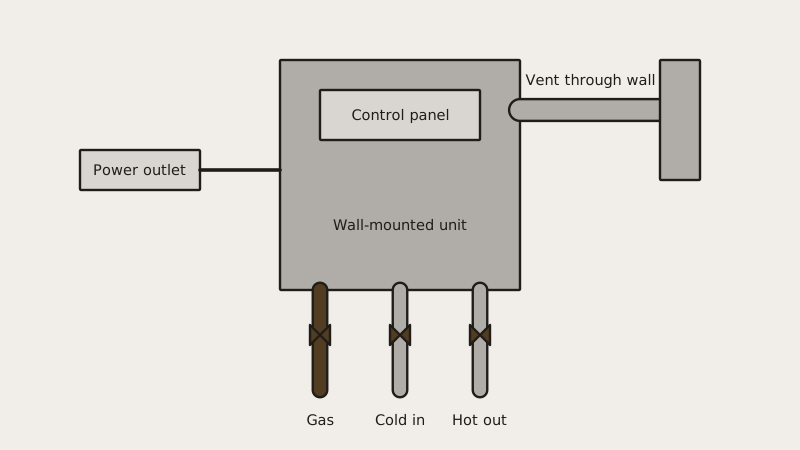
A Rheem tankless heater heats water as it flows instead of storing it, which frees the closet or garage floor and ends the cold-shower-after-the-kids routine, but it asks more of the house than a tank does. Gas models commonly want a larger gas pipe, fresh venting and a condensate drain. Our water heater replacement page puts tank and tankless choices side by side.
Ahead: the steps of the job, the Rheem series on offer, a price guide, the upkeep Pasadena's hard water demands, and who the law lets do the work. Start a booking at the quote page.
What does installing a Rheem tankless water heater involve?
The plumber removes the tank, mounts the tankless unit on the wall, connects cold and hot water with service valves, runs a new vent, connects gas through a line sized to the unit, adds a condensate drain for condensing models, sets up power, tests combustion and flow, and arranges the permit inspection. That makes it heavier work than trading one tank for another.
Most of the extra work is gas and air. A tankless burner draws a lot of gas at once, so the existing half-inch line may be too small, and a tank's old vent usually cannot be reused. Condensing models produce acidic condensate that must drain somewhere legal.
Expect the plumber to look at gas meter capacity, pipe size and length, the vent route, an outlet for power, and the water supply before giving a price. That survey is why a written quote needs a visit, not a phone guess.
Which Rheem tankless models are there?
Rheem's residential line includes gas condensing series (IKONIC, RTGH and ThermaForce), non-condensing gas models (the RTG-R series, indoor and outdoor), and an electric model. The flow ratings on Rheem's page run from about 6.6 to 11.2 gallons per minute for gas and up to 4.3 for the electric unit.
Condensing models are more efficient and vent through plastic pipe, while non-condensing units are cheaper and need stainless venting. Some models add Wi-Fi, a built-in recirculation pump for faster hot water at distant fixtures, or leak detection. Which suits you depends on bathrooms, simultaneous use and where the unit goes.
The electric unit draws heavy current, which can mean an electrical upgrade depending on your panel, so many homes with gas choose a gas unit. Request sizing from your peak simultaneous demand, shower plus dishwasher for example, rather than from the tank coming out.
How much does a Rheem tankless installation cost?
As a guide, 2026 price pages put a gas tankless installed at roughly $1,600 to $5,600 on HomeGuide's range, with contractor pages quoting higher once the gas line and vent need upgrading. Extras include a larger gas line, about $350 to $2,000, and new venting, around $300 to $900.
The spread is wide because the appliance is just one line on the invoice. The unit itself commonly runs about $1,000 to $2,600 for gas. Pipe size, vent length, wall access, condensate drainage, permit fees and hauling the old tank away make up the balance.
For a Pasadena house, rely on the written price delivered once the plumber has walked the property. More pricing detail sits on our tankless installation cost page.
Does Pasadena's hard water matter for a tankless heater?
Yes, a great deal. Pasadena Water and Power describes the city's water as very hard, averaging 12.9 grains per gallon, and scale can coat a tankless heat exchanger fast, a separate headache from sediment settling on a tank floor. Manufacturers generally call for periodic descaling, and skipping it can shorten the unit's life.
Price guides mention yearly descaling, taking an hour or so, costing little if you do it with vinegar and a pump and more if a plumber does it. Check Rheem's installation and care manual for the interval and for what a warranty expects, since terms vary by model and we do not quote them.
Some owners add a water softener alongside a tankless heater. Our softener installation page explains the equipment, and the plumber should look at both together.
Who may install it, and is a permit needed?
A gas tankless install is gas and plumbing work. Whoever installs it must hold a California contractor license and pull a city permit. Pasadena's Building and Safety Division states a plumbing permit is required whenever a water heater is replaced. Other cities in the San Gabriel Valley have their own offices.
Do not attempt this one yourself. If gas is ever detected, evacuate first. The utility's emergency line, 1-800-427-2200, is for use from outdoors; 911 is reserved for danger. The permit also brings an inspection of gas piping, venting, combustion air, relief valve discharge and earthquake strapping where it applies.
Air quality rules in this region also affect which gas models can be sold and installed, and they have been changing. Confirm that a chosen model is approved for Southern California before you buy it yourself; a plumber who installs these regularly will know the current list.
Tank or tankless: which is right for my house?
Tankless suits households that want endless hot water, have wall space and a workable gas supply, and plan to stay long enough to recover the higher upfront cost. A tank is simpler and cheaper to swap, especially where the gas line and vent are fine as they are.
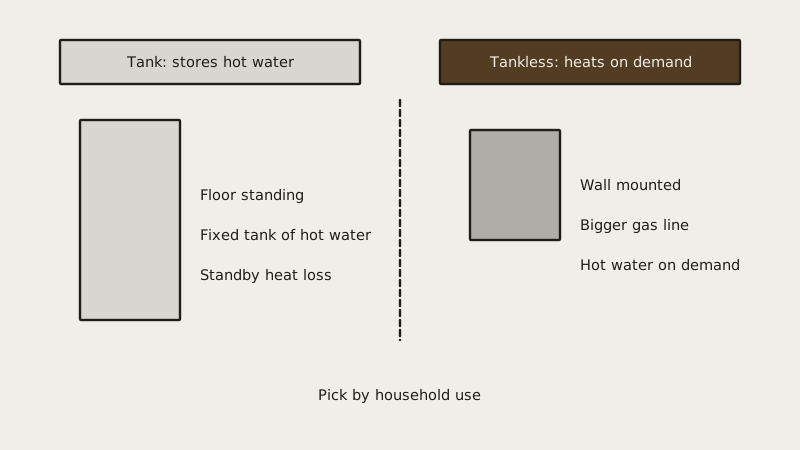
Guides credit tankless units with about 15 to 20 years of service and tanks with 8 to 12, although care in hard water shifts both. Savings on the gas bill are modest for many households, so do not buy on the promise of big savings alone. Our tank versus tankless guide compares them in detail.
Already own a failing Rheem tankless? The repair page is the place to go.
Common questions
What is the timeline for a Rheem tankless install?
Many installs finish in a single day. A new gas line, a long vent run or wall patching stretches that. The plumber sets a schedule after viewing the house, and gas and water shutoffs during working hours are normal while the old tank comes out and the new unit goes in.
Do I need a bigger gas line for a tankless heater?
Often yes. A tankless burner draws more gas than a tank burner, so a half-inch line may be too small, and guides list upgrading to a larger pipe at roughly $350 to $2,000. The plumber checks the meter, pipe size and length before quoting.
Can I reuse my old water heater vent?
Usually not. HomeGuide notes that the vents from an old tank gas heater cannot be reused for a tankless unit. Condensing models use plastic vent pipe and others use stainless pipe, with routes and clearances set by the manufacturer and the code.
Does a tankless heater need maintenance?
Yes. Guides recommend a yearly flush to remove scale, which matters in Pasadena's very hard water, plus a check of the filter screen and vent. Follow Rheem's manual for the interval, because warranty terms vary by model and you should not assume them.
Does a tankless heater pay for itself?
Sometimes: when you want continuous hot water and floor space back, and expect to stay for years. The upfront bill is higher and gas savings tend to be modest. A tank remains the budget option, and a plumber can run the numbers for your house.
The rest of our guides start from Pasadena Pipe Works plumber.
Sources
- Rheem, residential tankless water heaters
- HomeGuide, tankless water heater installation cost
- Handyman Connection of Pasadena, water heater replacement cost guide
- City of Pasadena Building and Safety Division, water heater standard
- Pasadena Water and Power, water quality FAQs
- South Coast Air Quality Management District, rules for residential gas appliances
Page updated