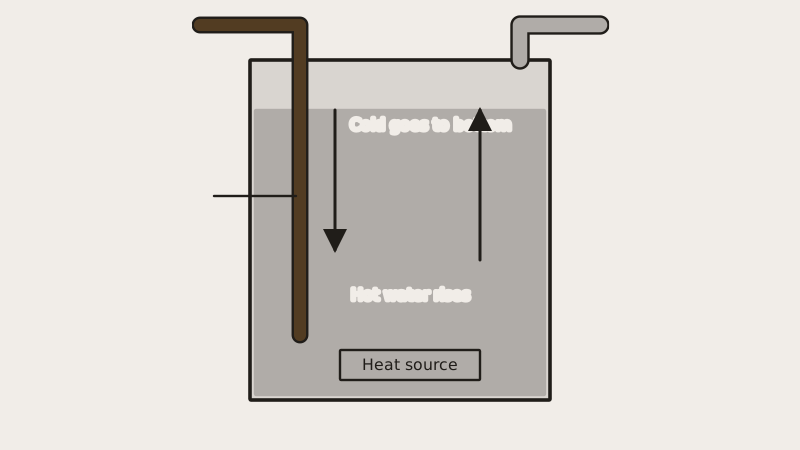
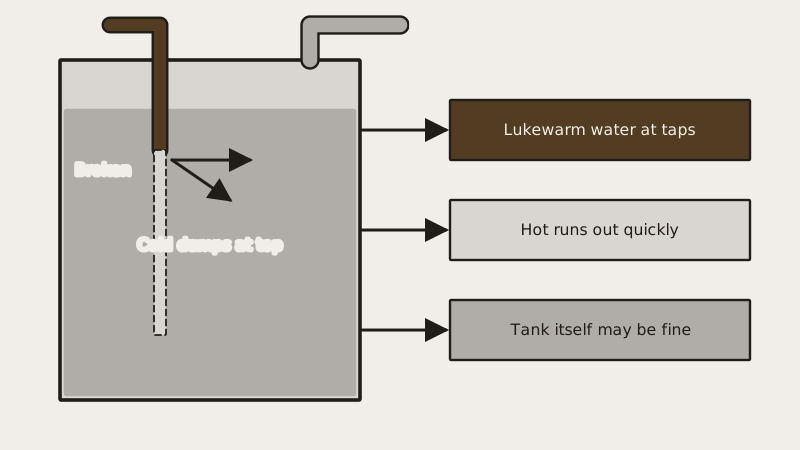
A dip tube is a plastic pipe that carries incoming cold water down to the bottom of a tank water heater. When it cracks or crumbles, the cold water spills in near the top, where the hot water leaves, and the supply goes lukewarm within minutes. The part is cheap, often under $20, and the repair is usually modest. If that sounds like your shower, start with the shower cold diagnosis, then come back here. The wider picture of repair against replacement is on our water heater page.
What does a dip tube do inside a water heater?
It sends cold supply water to the bottom of the tank, where the burner or the lower element warms it, instead of letting it blend into the hot layer on top. The tube runs from the cold inlet nearly to the tank floor. Without it, the heater cannot hold a stable layer of hot water.
Think of the tank as a layered column. Hot water is lighter and sits on top, where the outlet pipe takes it. Cold water enters through the dip tube at the base, so the layers stay separate and you draw hot water until the cold layer rises. When the tube breaks, the cold feed releases high up and cools the stored water. The heater still heats, but the usable amount of hot water falls sharply. It is a top-fed design: tanks plumbed with the cold inlet at the bottom do not use a long dip tube.
How can I tell a dip tube has failed?
The giveaway is hot water that does not last: a shower that opens hot and cools to tepid within minutes while the heater runs as usual. Small white or gray plastic specks in faucet aerators, showerheads, washing machine screens and dishwasher filters are the other giveaway.
Rule out the easy causes first. A burnt-out lower element on an electric heater, a weak burner on a gas one, sediment buildup and an undersized tank can all copy the symptoms. Pasadena's hard water, which the city's 2025 report puts at 202 to 256 parts per million, builds scale in tanks, so a plumber may find more than one cause. For related faults, see our pages on element replacement and why hot water runs out. Flushing the tank is the simplest check, since a failed tube often sends flakes out with the drain water.
Could my water heater have one of the recalled dip tubes?
If the heater was made between about 1993 and 1997, possibly. Trade press reported that dip tubes from that period, made by one supplier, broke into small white pieces, and several major brands used them, including Rheem, A. O. Smith and Bradford White. A class-action settlement followed, and its claim period is long over.
Age is the clue. A heater from the mid-1990s would be well past its working life now; tanks commonly last about 8 to 12 years, so a surviving one is rare, but older homes in Pasadena sometimes still carry original equipment, and flakes found in faucets can come from the same problem in a later model. Check the data plate for the date code. If yours is that old, spend on a new heater, not a new tube. Typical lifespan figures are in water heater replacement timing.
What happens during a dip tube replacement?
The plumber turns off the power or gas, closes the cold supply, drains some water, disconnects the cold inlet, pulls out the old tube and fits a new one of the right length. The tank is then flushed, debris is cleared from the aerators, and the heater is refilled and tested. Most jobs take one to two hours.
Details that matter: the old tube may crumble as it comes out, and fragments must not be left in the tank. The new tube is typically cross-linked polyethylene, cut to reach near the bottom. On heaters with a heat-trap nipple, the nipple is replaced at the same time. Everything must be sealed and the tank refilled completely before power or gas is restored, because an electric element powered up in a dry tank burns out quickly. For a gas heater, the plumber relights the pilot and checks the flame. Work around a gas control, the vent or a hard-piped relief valve drain follows the city's installation requirements, and Pasadena requires a permit when a heater is replaced; whether an internal repair like this one needs paperwork is something to ask the plumber and the city together.
How much will it cost?
Cost guides list the part at about $10 to $50 and the full repair by a plumber at roughly $100 to $250, with some sources reaching $500 once a flush, a heat-trap nipple or a seized fitting comes into it. All national guide numbers, which stand in for a Pasadena quote only loosely.
What shifts the price: the heater's age and condition, how hard the old inlet fitting is to remove, whether the tank needs a deeper flush after flakes, and whether other repairs are done in the same visit, such as an anode rod or a new relief valve. Gas heaters add a little time for shutdown and relighting. If the repair quote creeps toward what a new heater costs, request both figures together. Typical replacement ranges are on the water heater replacement price page, and the real number is the one in writing before the work.
Should I replace the dip tube or the whole heater?
Fix the tube when the heater is younger than about ten years, nothing is leaking, and the quote is small. Replace the heater if it is near or past its normal life, shows rust at the base, or has several other faults, since a new tube does not fix those.
Pair the repair with a quick health check: look at the anode rod, flush sediment, check the relief valve and check for corrosion at the fittings. A tube replaced in a tired tank can be money wasted if the tank fails next month. If you are weighing options, tank versus tankless compares the next heater type. To get a visit going, use the quote form and list the heater's brand, size and fuel, plus what you notice at the tap. See where we work for the cities we cover, or go to the home page for other services.
Common questions
What does the job do to my schedule?
Block off roughly two hours for a standard tank, covering draining, the swap, flushing and refilling. After that the heater needs time to warm a full tank, quicker on gas than on electric, so hot water is back later the same day.
Can I replace a dip tube myself?
It is a manageable repair for a confident person with the right tools, but power or gas must be off, the tank drained to below the inlet, and the heater fully refilled before power returns. Gas controls and vent connections are plumber work. A permit may apply if the job grows beyond the tube.
Who has to be at home while the plumber works?
An adult should open the door, show the heater and sign off on the written quote at the start. Access counts too: move boxes and tools out of the garage or closet corner beforehand. Once the work is finished, nobody has to wait around for the heater to warm up.
Could the white specks in my faucets come from the dip tube?
They can be. Small white or gray plastic bits in aerators and showerheads are a classic sign of a disintegrating dip tube. Lime scale also flakes, but it usually dissolves in vinegar, while plastic does not. Save a pinch of the debris for the plumber, who can then inspect the tank directly.
Sources
- Supply House Times, Settlement approved in dip tube suit
- Plumbing and Mechanical, Dip tube, water tank manufacturers may face class action suit
- Pasadena Water and Power, 2026 Annual Drinking Water Quality Report
- City of Pasadena Building and Safety, water heater handout
- Published water heater repair costs from home-service cost guides, checked November 2026
Page updated