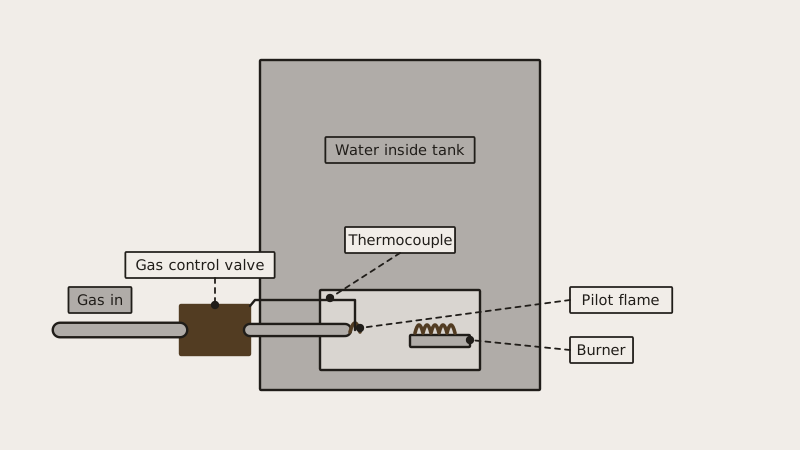
When a gas Rheem stops heating, the likely culprits are the pilot or igniter, the thermocouple or flame sensor, the gas control, sediment in the tank or a vent problem. You can safely check that the gas valve is open, the breaker is on for models with electronics, and whether a status light is flashing. Anything involving gas parts, venting or the burner is plumber work, which is what water heater repair on a gas unit means in practice. For replacement decisions, see water heater replacement.
Pasadena Pipe Works books local plumbers across Pasadena and the San Gabriel Valley. This page goes symptom by symptom, explains Rheem's own flash codes where they exist, and covers the Pasadena rules that apply to gas water heaters.
Why has my gas Rheem stopped heating?
Check, in this order: is the gas supply valve open, is the unit's gas control set to the on position, is the pilot lit on a standing-pilot model, and is there power and a status light on an electronic model. If all of that looks right and there is still no heat, the pilot assembly, thermocouple, flame sensor, igniter or gas control has probably failed, and a plumber should take over.
What each type tends to do:
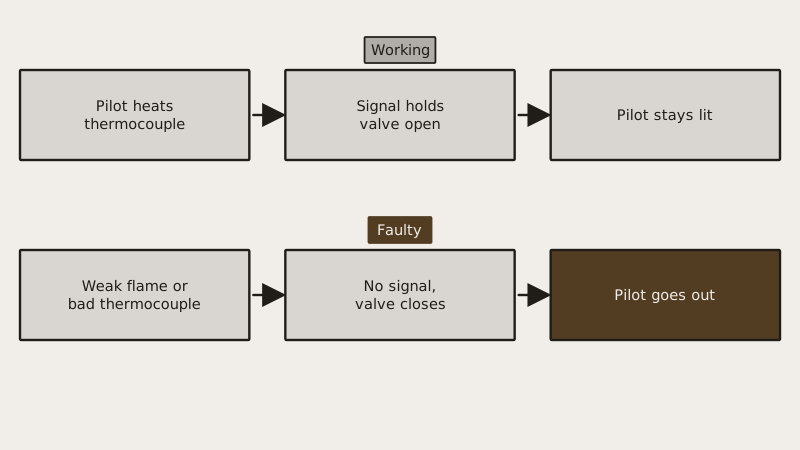
- Standing-pilot tank. A small pilot flame warms a thermocouple, and that signal lets the gas valve open. A weak or missing flame, or a tired thermocouple, keeps the burner off.
- Electronic ignition. An igniter lights the pilot or burner and a flame sensor confirms it. A dirty electrode, a weak spark or a failed sensor causes lockouts.
- Blower or PowerVent models. These add a fan, a pressure switch and a control board, so there are more places for a fault.
At any point, a gas smell ends the troubleshooting. SoCalGas (1-800-427-2200) wants you out of the building first, with no switches flipped, no flames lit and no do-it-yourself fixes on a damaged pipe.
What does it mean when my Rheem's pilot light keeps going out?
Typical causes: a worn thermocouple, a clogged pilot orifice, a draft, or weak gas supply. The thermocouple, which senses the pilot flame, is the part replaced most often. Rheem's technical bulletins include pilot-outage troubleshooting and thermocouple replacement for its flammable-vapor-ignition-resistant models, the kind of reference a plumber works from.
Clues:
- Out as soon as you release the knob: frequently the thermocouple, or a flame that is not reaching it.
- Dies when the burner kicks in: a draft, a gas pressure issue or a pilot flame that lifts off the sensor, a pattern Rheem bulletins describe on some electronic controls.
- Dies now and then: soot or a blockage at the pilot, or ventilation trouble in a closet or garage.
The relighting steps appear on the heater's own label. If it will not light, or dies again, stop there, and never clean or bend gas parts yourself.
What do the flashing lights on a Rheem gas control mean?
Certain Rheem gas valves carry a status LED that blinks a code. Take Rheem's bulletin for PowerVent models with an electronic control: six flashes then one means a failed trial for ignition, six then five is a hard lockout needing a manual reset, and seven is a flammable vapor sensor lockout. Codes are model-specific, so rely on your own unit's label and manual.
For ignition failure on that control, the bulletin names low gas pressure, carbon on the spark electrode, damaged igniter wire, a blocked combustion air inlet and a restricted pilot tube. Its remedies: clean the electrode and pilot hood, verify the spark and the air inlets, and cycle power to clear a lockout. This is a technician's list because gas pressure is involved.
Count the flashes, copy the model and serial number off the rating label, and pass all of it to the plumber. Rheem keeps its bulletins on a public technical page for exactly that kind of lookup.
What if the water is lukewarm or runs out quickly?
Short supply often means sediment, a cracked dip tube or a burner problem. In a gas heater the sediment settles right where the burner fires, so efficiency drops and the tank may rumble. Rheem advises flushing yearly for most households and every six months where water is hard, which fits Pasadena.
In 2025 Pasadena Water and Power recorded hardness from 202 to 256 ppm, about 13 grains per gallon, and notes that this hardness accumulates in heaters and shortens their effective life. Rheem's flush: shut off the gas or power plus the cold supply, run a hose from the drain valve, open the relief and drain valves, empty the tank, then close up and refill before relighting.
Other causes of too little hot water:
- A thermostat set low, or a gas control that has drifted.
- A cracked dip tube, which lets cold inflow skip the bottom of the tank: see dip tube replacement.
- A used-up anode rod, which does not cut heat but exposes the tank to corrosion: see anode rod replacement.
- A household that outgrew the tank.
Rheem names a drain valve that sticks or leaks, heavy rust at fittings, noise that persists after a flush and a heater of roughly 8 to 12 years or more as signs to bring in a professional.
Which other faults turn up on a gas Rheem?
Beyond pilot and ignition trouble, plumbers meet leaks, discharging relief valves, sediment rumble, sulfur smells in hot water and sooty or yellow flames. Water from the tank body ends in replacement, a dripping relief valve may be a pressure problem, and a rotten-egg smell from hot taps alone often involves the anode rod and bacteria.
Pointers:
- Leaks: start with the water heater leak page.
- Dripping relief valve: see relief valve replacement and the expansion tank.
- Unresponsive gas control: a plumber replaces it, as gas valve replacement explains.
- Pilot lit, no heat: read no hot water with the pilot on.
- Yellow, sooty or lifting flames: shut the heater down and phone promptly, since combustion and venting are involved.
Which Pasadena rules cover a gas water heater?
Pasadena's Building and Safety Division calls for a plumbing permit whenever a water heater is replaced, and its handout sets standards for venting, clearances, relief valve drain, strapping and garage installs. Swapping a minor part may leave the installation untouched, while replacement or gas line changes do not. The contractor working under a California license handles permits and inspection.
Highlights from the city's gas-fired water heater handout:
- Garage installs: the flame sits at least 18 inches off the floor on a stand built to the handout's spec, with a crash post where a vehicle could hit the heater. The 20-by-20-foot garage space stays clear, and the city wants approval before placement.
- Relief valve drain: hard-piped, at least the size of the valve outlet, ending outdoors 6 to 24 inches above grade, pointing down, untrapped and unthreaded at the end. Draining into a pan under the heater is prohibited.
- Venting: per the maker and the city, with set slopes, clearances and offsets.
- Strapping: two restraints, one on the upper third and one on the lower, as the state requires for earthquakes.
Other cities in the valley have their own building departments, listed through where we work.
What happens when a plumber is called in?
Phone for any gas smell, any pilot or ignition fault that checking the gas valve does not cure, any leak, any soot or odd flame, or a failing heater past roughly 8 to 12 years. The visit covers the model and codes, the gas supply and controls, and the vent and flue, ending in a repair or replacement quote. You begin at the quote form.
If replacement is the answer, see gas water heater replacement cost and tank versus tankless.
Common questions
How soon is it working again?
A thermocouple, igniter or gas control swap is often finished in a single visit of an hour or two, provided the part is in the van. A relief valve or flush is similar. Blower, control board and vent repairs can wait on parts, and a full replacement runs half a day to a day.
What do I settle before work begins?
The contractor's license number, checked with the state. Whether the price covers diagnosis and parts, whether a permit applies, and how gas and venting will be tested at the end. Warranty terms from both Rheem and the installer. And the total, on paper.
May I relight the pilot on my own?
Many owners do, following the instructions on the heater's label. With any gas smell, stop, leave and call SoCalGas. A pilot that will not light, keeps going out or burns wrong is a plumber's problem. Never bypass a safety device, and never relight a heater where gas can be smelled.
What flushing schedule suits Pasadena water?
Rheem says yearly for most homes and twice a year in hard water. With Pasadena water near 13 grains per gallon, the shorter interval is the sensible one. The routine: gas or power off, cold supply off, a hose on the drain valve, then refill before relighting. A drain valve that will not open means calling for help.
Sources
- Rheem, how often to flush your water heater
- Rheem, water heater technical bulletins
- Rheem technical service bulletin 1627, PowerVent with electronic control (flash codes and troubleshooting)
- City of Pasadena Building and Safety Division, typical residential gas-fired water heater requirements
- Pasadena Water and Power, 2026 Annual Drinking Water Quality Report (2025 hardness)
- SoCalGas, natural gas leaks
Page updated